Showing posts with label Books Music Culture. Show all posts

Jan 20, 2015

The ready conflation of 'freedom of speech' fillip with free-for-all racism

Most satirical cartoonists I follow tend not to agree with Joe Sacco's take on CH. 

But I do.

The ready conflation of 'freedom of speech' fillip with free-for-all racism seems to have missed their perspective, at least within the black and white constraints of comic making.
But Sacco attempts to express the complexity of the context and reflect that back on the responsibilities of satirists.

At issue ultimately is calling out CH for what it is and for what it does. That's not the same as advocating that satire be censored. 

Unfortunately the whole 'Je suis Charlie' thing will transit a pandemic of public Islamophobia under guise of 'freedom of speech' and the most racist dog in any land will be celebrated for their courage and POV.

Under cover of 'satire' -- more public racism against Moslems, more excuses for rolling back civil liberties and a festering rationale for either killing more of 'them' offshore and xenophobia.

"Freedom of speech" historically is supposedly about empowerment and democracy -- enabling the oppressed and brutalised to articulate their protest. 

So how does that stack up with the current fall out?


May 20, 2013

A few political cartoons

Inspired by the Socialist Alliance election campaign I've been creating a few memes.I used my preferred collaging/montage techniques.

Of the cartoons (they masquerade as 'memes') displayed here I created three of them in one overnight sitting. I guess my apprenticeship with Mr Punch is paying off.


Click on images to enlarge view.


Dec 15, 2012

Stop Motion is a great start

Toyboat.Toyboat.
"Stop motion,where have you been all my life?"

I know I said something like that about comics...but there you go: when you follow your nose you get to  see where it leads.

I don't like a lot of stop motion.Maybe I don't like most of it. But then, I know what I like.
And I've come across a couple of others that speak to me -- avant garde, independent animators using a range of techniques: 
Here's a sample from Breer, made in 1957 which I really like:


What has surprised me is how easy was my own initial efforts were to do.  I've now packaged these as Punch TV.

There's a few features here worth teasing out.
  • I can use the same visual language as I deploy for the comics. In fact one reason I was drawn to cut out stop animation was that I recognized how the comics I did and the techniques I used were reminiscent of  Gilliam's Monty Python animations (and Breer is a Gilliam precursor).
  • There's a logic in the process of creating stop animation that suits the panel-by-panel sequencing you follow with comics. I like it because there's no waste -- no fill. You have to be very dense and concise because creating a second of film at , say, 15 frames per second is gonna take you a  lot of time unless you demand visual efficiency from the images you use. And stop motion is creating  a lot of images. A 15 frames per second, say, that's 900 separate images per minute.
  • More so than with comics you can play tricks on the viewer's eye and expectations. It's like sleight of hand in the same way that you can animate an object and turn it into a puppet. You have movement as a primary tool to play around with. It's a shell game. 
  • The irony is that because stop motion can utilize anything -- and I do mean anything --  to make movement happen  it enriches the possibilities of comic making because you have  a better sense of sequencing without being bogged down in  brutal narratives. Anything is truly possible. It moves because you animate it -- give it life. Absolutely MIXED MEDIA friendly.
  • The irony is that my present tools -- especially ComicLife -- make stop animation so darn easy to do. I make the panels in ComcLife then I use Smoovie to create the animations -- and it is ridiculously easy to turn a bunch of images into a video. I hope to get a usb webcam which will enable me to move away from my dependence on the computer screen. ret assured I won't being doing Leggo animations.  They're banned from my desktop.
The Quest

Because I am handicapped by chronic illness which has sabotaged my ability to do theatre, puppetry and sundry other performing artz,  comic making and stop motion are a exciting sedentary substitute in a way that relying pure video, audio,  painting, or photography are not. 

The other plus is thats ince my drawing skills are so shallow and so rusty I can explore other means to make my comics and animations. 
And since my daughter is studying animation at university...
I tell you: it's win, win, win.


Nov 23, 2012

Webcomic Makings :Projects, Possibilities and Stop Motion.

'Mr Punch and Prof Ratbaggy [Emeritus]  is now a 4 months old webcomic, which is surprizing given that I had no idea what I was doing...at all. En route there have been a couple of series -- one on refugees, the other on Fibromyalgia -- and an intensification of the relationship between Mr Punch and the Prof.

All up, over seventy comic 'pages'.

I've skilled up as  I  pursued an eclectic production niche:photomontage comic making. No use of Photoshop (I've banned it, besides I can't do it nor do I own  a copy)-- just a mix of apps/programs. Primary images shot onscreen with an inbuilt camera.

The knack is to work quickly -- unlike the comic making norm where inking and sketching is so laborious. But 'quick' still takes hours to complete. 

Magical hours. 

At the moment I'm exploring crayon on paper as a skill  exercise to supplement  the photomontage effects I rely on.  I need a graphic  tool to  fill the  space where the  digital imagery runs out. I like crayons and pastels because I can work them into 'shape' with my fingers without having to fret over the lines I draw. For me it's like working with clay. Dry clay.

Without going into details, I need to skill up to be able to tackle a couple of pending projects that I'm keen to pursue:

  • A study on the Northern Territory Intervention  in comic format.
  • A memoir  -- no doubt in many segmented instalments - that turns my own life into a comic excuse.
  • An exposition of socialism in  similar mode to Rius works like Marx for Beginners and Cuba for Beginners.
I also want to master stop motion animation...and have a few ideas in mind about that.
Stop motion is easy to do(the way I'd do it -- in fact I have done it) but time consuming and fiddly. A lot of work goes into a few seconds of video time so you have  to concentrate on the important narrative bits. 
Busy. Busy.

I nonetheless need to skill up so that I can tackle the demands of 'editorial' cartooning.  Day to day, ad hoc, graphic political satire demands language skills I'm still working on. So far I haven't felt comfortable with my satiric approaches. The tools I'm using and panel layout I rely on  don't seem to suit.  The complication is that  editorial cartooning  is usually projected in one panel and I want to engineer sequence. That also takes up more space on the page...and journal editors who are always word obsessed, of course,  are notorious space misers: all the words that fit -- graphics are deployed primarily as decoration.

The other bang to my webcomic buck is that I'll be converting my series projects into ebooks, presentations  and other shareable file formats.  For now, with all their black background, they don't suit hard copy.
But hey! If a publisher is out there and wants to talk turkey...
As for site traffic, it's rising...but then I use a combination of three locations online:
So it's hard to estimate day to day patronage. But a few thousand patrons a month after 4 months of existence isn't bad. 


Nov 10, 2012

You can do so much with comics because that's where it all comes together

Well, that's over and done with.

I finished my latest comic series -- Fibromyalgia for Beginners -- and are primed for another.

It took me just over a month to do the 21 pages on a approximation of an every-second-day work schedule, usually in 3-5 hour shifts.

Compared to standard comic making -- with pens and pencils -- that's fast. I doubt I could work at that normative achingly slow pace. 

I value speed...and shortcuts...and laziness.

En route I learnt a lot of techniques and exposed myself to even more creative options.

So the world is my comic oyster.

While I still have heaps to learn and while I still seek to continue  my chats with Mr Punch (when I'm busy on this other stuff I miss time spent with my puppet friend) , I'm keen to ramp up my comic commitments by taking up more challenging projects.

To mind are the following possibilities:
  • A personal political memoir, maybe in snippets
  • A meditation on the Northern Territory Intervention into Aboriginal communities
  • An exploration of  'socialism' and how to get there (from here) in the mode of Rius' work (eg: Cuba for Beginners, Marx for Beginners)
  • I'd also like to get into doing 'editorial cartoons' of sorts...
An experiment in going back in time using GIMP +

The complication so that any of these options present challenges and demand approaches I don't as yet posses or master.

There's also a lot of research involved...before any graphic can be created.

So I'm looking at ramping up my comic work load and committing myself even more assiduously  to the  desktop.  

Nonetheless, I've worked out that distributing whatever I create  requires an eclectic mix of media publishing approaches -- online (both my site and others); via ebooks (by using my present preferred publisher, Smashwords); as presentations (using Slideshare); as standalone pdf files using Scribd...) .

Then there is the other possibility of doing stop animation which I'm sure -- after a time when I've mastered a few more techniques -- will be painstakingly 'easy'. "Easy" maybe given that my daughter is studying animation.


Who woulda thought that after all this time (alive on earth) I'd alight on comics as my preferred and passionate outlet? I'm even gonna start sketching again. 

It shows how confident I am in pursuing the medium. Not how good I am but how much I love doing it.

In the space of a few months -- since late July last, that's just over 3 months --  I've created almost 70 pages, and some of it, I think, is quite good both in graphic impact and/or narrative flow.

I even have fans! One guy, my age, who is a graphic  and comic artist of sorts thinks that my strip "is absolutely brilliant" and friends of mine who are professional artists are extremely supportive.

My advantage is that I'm a tad different from the art school crowd: I pursue a photomontage niche.  Photomontagers I appreciate nonetheless are not as productive as I as they seem caught up in their piece works, whereas I just throw it together.

I'm not looking for kudos, mind. I'd do this no matter what. It is nonetheless strange that some in my network just don't get it. But every time I read a comic -- and I gormandize them -- I marvel at what you can do with sequential art and puffs of talky smoke.

Indeed my whole outlook on life and politics is now being formatted by this panelled and photomontaged perspective. I'm looking at ways -- such as by taking sketching material with me always --  I can work on this stuff away from the computer. In my mind is the notion of doing stuff by hand and then integrating it later digitally. You can scan anything into a computer so that all the sort of Kurt Schwitters  Mertz stuff I love could now be replicated.

The irony is that I find my closest contemporary  deference  within the scrapbooking and journaling communities. 

I can see myself sitting in coffee shops with an appropriate sized Moleskine notebook sketching elements of my panel art.

My partner and I are also discussing how we could convert her Phd thesis into  comic format.... Not so bizarre if you have read  Logicomix: An Epic Search for Truth -- an innovative, dramatic graphic novel about the treacherous pursuit of the foundations of mathematics -- or the scientifically detailed, Cartoon History of the Universe.

You can do so much with comics.

The only draw back is that my 'style' doesn't lend itself to printing because my strips would be ink dense and expensive to duplicate. They'd also have to stay printer page small. Maybe as limited editions, perhaps -- for the fam? Another option is a gallery show* if I wanted to go down that route.....but that's just egocentric indulgence.

I'm pretty happy staying online...

So there: it all comes together in a comic for me. 


*I have ready access to a gallery


Nov 4, 2012

The Beats: A Graphic History


You read this and then the penny drops. It is from the beats that Harvey Pekar got his writing style.
The Beats: A Graphic History by Harvey Pekar, Nancy J. Peters, Penelope Rosemont, Joyce Brabner, Trina Robbins, Tuli Kupferberg, Paul Buhle (Editor), Summer McClinton (Illustrator) ,Peter Kuper (Illustrator), Mary Fleener (Illustrator), Jerome Neukirch(Illustrator), Anne Timmons (Illustrator), Gary Dumm (Illustrator), Lance Tooks (Illustrator), Jeffrey Lewis (Illustrator), Ed Piskor (Illustrator), Jay Kinney (Illustrator), Nick Thorkelson (Illustrator)
And Harvey wrote real good, engaging dialogue and narrative.

Me, I'm no friend of the Beats. Arrogant self centred poseurs full of their own self importance....but who sometimes happened to write well. I say that because I luv the poetry of Allen Ginsberg....and if the pitch here is correct and the dead hand of Beatdom lasted into the late sixties, then I too am caught up because I was an aficionado of The Fugs.

The story told here is nonetheless a very thoughtful cultural history built around a succession of profiles and as a social documentation of a phenomenon -- no doubt due to Paul Buhle's input -- this is a very useful history which fleshes out and peoples the post war avaunt gardism.

But since so many Beats were macho assholes, Joyce Brabner's graphic essay on Beat "Chicks" reminds us how misogynistic they were.

(What Patti Smith saw in William S. Burroughs I don't know!)

I told you I don't like them, right. Go find heroes elsewhere, says I....

But if you listen delighted to The Fugs or read Howl today , spare me/spare us The Naked Lunch or On the Road . For me though, the context that fostered the Beats into being also encouraged a broader improvisational style of writing, performance and presentation and it is disingenuous to allow the self conscious, self-labeling "Beats" ownership of the copyright.

The stand up of Lenny Bruce, the journalism of Hunter S. Thompson -- indeed so much of the sixties cultural experimentation -- was a Beaty as as any self employed registered Beat professional laid claim to. 

Their source was drugs, jazz and the times that were "a'changin"...not an adding machine guy (William S. Burroughs ) -- in a particular period of a post war economic boom and a pervasive Red Scare.

But if you want to engage further with the Beats and explore their existence -- this comic is a great place to begin


My comic universe is expanding

I've been working on my current project Fibromyalgia for Beginners longer than I expected. That's not because of unforeseen obstacles in my path but because I did not plan it out, instead preferring to wing it.

Fibromyalgia for Beginners
I suspect that, after reading Harvey Pekar's comic,  The Beats: A Graphic History ,  winging it -- in 'stream of consciousness' mode (like The Beats did) -- may be comically kosher. Of course you write scripts for comics -- even different people often write the words and story from them that illustrates -- but when you do both I value the improvisational excitement and creativity you get by making it up as you go.

More so now that I'm deploying so much montage.

But I do work from notes and a sort of mind map of the overall. You see I'm seeking a discursive result. The discipline is the form itself -- the number of panels in a page, the necessity to relate pages to each other, panels to each other... and the cut and paste medium.

It's the episodic nature too that formats the way it all comes together. It lends itself to instalments. 

A review I did of Bruce Mutard's wonderful Australian graphic novel, The Sacrifice has been published in the latest edition of Green Left Weekly -- Graphic novel brings old war times to life -- and I have submitted some other comic reviews for publication. So I guess I may be doing more of that sort of writing with a GLW audience in mind.

Bruce sent me a nice note about my assessment outlining his plans for the trilogy of which  The Sacrifice was the first part. 

Hearing how it is done from a master makes my exertions shallow indeed, almost fickle. These things take years to create and I'm expecting to finish my latest project in under two months. Of course I'm not drawing a single line so I'm doing it easy.

But while I do this I pine for my chit chats with Mr Punch so every now and then I have to go talk to the puppet who has en route, developed facial expressions.

Even puppets are not immune to the laws of Evolutionary Biology.

To that end I suspect I may have to take  drawing just a teensy wee bit.


Oct 8, 2012

My chickens have come home to roost.

This isn't off topic.

Following on my from last comments on comic making, I've had the opportunity to explore my POV more actively at the coal face.

I'm now composing another series of strips on my experience with Fibromyalgia.

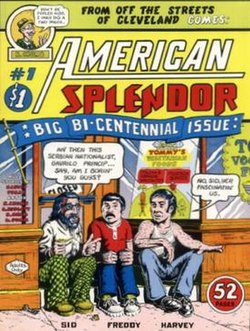
This autobiographical exercise is  engineered under the influence of American Splendor but without Harvey Pekar et al's street level realism. 
ASIDE: American Splendor offers a very mundane take on the world. It's day to day narrative existence is held in place by  a superb ear for dialogue and considered narrator's voice interventions. That's its strength -- says I , as I work my way through all of the comics in the series.
Go to archive: Fibromyalgia for Beginners
I don't know where my work actually locates itself in way of its form. It reminds me of a monologue ( as in a stand-up narrative) driven by a mishmash of 'offers'/suggestions from graphic items that help drive the story line.

If I was drawing the thing I'd fill each panel with intended art, line by line. I'd have to start composing each panel with a completed image in mind.

It would be rather conventional, by default...and it would take me much longer to create each strip.

But since I'm doing this with photomontage, each panel comes together via found graphics and every time I find an item its further manipulation  is an unknown option until I start fiddling. So the process is layered by this pulling in of mixed elements and aggregating. The photos I take, hold the mix together  and hopefully consolidate the narrative.

What I am doing I actually began doing way back when I was an adolescent. I used to make cartoonish drawings to illustrate science projects and history lessons. I later kept scrap books where I pasted magazine and newspaper cuttings  in the form of collage.
I even collected, cut and pasted a few years of Gary Trudeau's Doonesbury comic strip...
Over the years I've designed and laid out many political leaflets so I got to  fiddle with images  especially found ones. More recently I've paid my dues as a web page designer...

I've also been a dedicated follower of DADAism and am an aficionado of the cultural explosion during the Weimar Republic (Germany before Hitler).  Think: montage.

So everything I know, everything I've learnt, is coming together in this effort. And that's besides the theatre -- street theatre, cabaret, puppetry, mask making and performance -- background I also rely on as a toolkit.

Why I should contemplate the question of whether anyone else is doing this, I don't know. It has to be rather eccentric...
But hey, I keep looking for like stuff. Nonetheless, my great inspiration is the political cartoons of Mr Fish. I would look at his cartoons and say, "Wow! What a great way to comment!" He uses a lot of self evident montage elements in his work. The Fish got me thinking....what if?
All my chickens have come home to roost.

How good it is, in terms of other peoples' endorsement, is not something that concerns me at all. It certainly appeals to me and I get one helluva kick out of doing this.

That's enough.

Since I began, only in July, I have created almost 50 comic strips although I began without any of my current montage-ing skills and preferences. Now my routine and learning curve are consolidating.

Some panels, in my estimation, are impressive  -- ie: by my standards of what I want or like.

The other interesting feature of this process is the logic of the 'one home', the one comic strip of a set size. The template forces me to actively try to bend the form in order to go where I want to take it. While the formula has its limits and imposes a certain discipline  I am surprized how far I can push this as I learn the graphic language.


Sep 22, 2012

Verfremdungseffekt: Mr Punch and the Moslems

Click on comic image for enlarged view


While I'm still experimenting I am trying to tackle more political themes in my webcomic  -- Mr Punch and Prof Rabaggy [Emeritus]. It isn't an easy challenge to explore but I suspect perseverance will win out.

The best thing about this exercise is that I get to manipulate in montage mode and the interfaces I  improvise are exciting to work with. A little bit of snip here and there, some copy and paste, then resizing and positioning....

It's learning a language while making up your own syntax. That I can work 'quickly' with the tools I choose to use means that I am not handicapped by  pretension. There is no best-of-all-possible images -- just the flotsam I can harvest, usually from online searches.
…An artist who is inspired is being obvious. He’s not making any decisions, he’s not weighing one idea against another. He’s accepting his first thoughts. …Striving after originality takes you far away from your true self, and makes your work mediocre. — Keith Johnstone, Impro: Improvisation and the Theatre (1981)
Years ago I read Ways of Seeing and this essay by the Marxist cultural critic, John Berger , changed my view of 'art' completely. Of course Berger draws a lot on my other fav, Walter Benjamin's The Work of Art in the Age of Mechanical Reproduction

Montage for me is the marriage of many of the possibilities flagged by Berger and Benjamin. If what we call 'art' is so readily reproduced in the digital age and shared, consciously remaking culture by recycling snippets of what is already available is  truer of our aesthetic production than we  are willing to own up to.

The other element of this I appreciate is that it locates dialogue up front and centre so that discourse gets to play out by following its own dialectical logic.

My theatre backgrund of course rules my preferences but while I'm a dedicated Brechtian I am also influenced by the perspective advocated by Keith Johnstone in regard to the process of improvisation.
“You ask me where I get my ideas? That I can’t say with any certainty. They come unbidden, directly, I could grasp them with my hands.” 
This may seem a contradictory convergence  -- although 'contradiction' is the driving force of all stuff.  When you start throwing all this  into the same pot with Dada and Constructivism..and Marxism, it has its own sweet logic. 

To me, anyway.

At least that's what I thought -- but I could never quite get my own creative juices in sync with the prospects that seem to be on offer. But when I realized the power of  comics and how comics could be created via montage methods, well, all my Christmases had come at once. 

No need to learn lines or perform. No onerous setting of the scene. No strict narrative form. No arty delusions hiding the tools used. Being both active in the panels  as performer and creator -- while   outside the process and  distanced in the Brecht sense. 
 Verfremdungseffekt (translated as "defamiliarization effect", "distancing effect", or "estrangement effect")
Self evident engagement where the value of the end result is greater than the sum of its many disparate parts.

It was also a bit of shock when I recognized that I could be 'me' (sort of) as though I was  a player in my own repertory company and co-star of my own show. (I thank the example of Harvey Pekar and Joe Sacco -- and the autobiographical comics genre -- for that option.)

I could also get this 'me' to work  my own preferred  hours and do all my bidding.

Since I have a commedia dell'arte background (sort of) the logic is sweet: cartoonery characterizations performing skits (albeit in panels on a web page) in empty black space calling up anything -- any tool -- that takes their fancy.

If you do your homework on the theory of montage  you'll perhaps see the possibilities.

What I get is this great synthesis to play with and explore. But the irony is that unless you have done Improv and fiddled with photomontage you may miss the argument I'm trying to make. This isn't about the digital powers of Photoshop (which I do not use) because  I'm not striving to reproduce reality seamlessly by manipulating images to pretend that they are original or arty. It's more snip 'em and slap  'em together rather than anything else. Discordance rules and has to be seen to rule.

It's like a digital pin board and John Berger said this about them.
“Adults and children sometimes have boards in their bedrooms or living-rooms on which they pin pieces of paper: letters, snapshots, reproductions of paintings, newspaper cuttings, original drawings, postcards. On each board all the images belong to the same language and all are more or less equal within it, because they have been chosen in a highly personal way to match and express the experience of the room’s inhabitant. Logically, these boards should replace museums.”- Ways of Seeing, John Berger
But then I could go on and on and maybe discuss Merz but then, that would be like opening up a can of worms...


Sep 12, 2012

Ideology Webcomic

Click on comic image for enlarged view

I won't be posting all of my webcomics here but I will share the ones that have a relevant topic. My hope is to do more 'political' ones like this and slowly move into more frequent editorialising. 'Tis all a matter of practice and experimentation. While I am in transit to a new domain, the webcomic series --  Mr Punch and Prof Ratbaggy [Emeritus] -- lives here.


Sep 8, 2012

Montage a go go

Montage by Philippe Jusforgues
So there's me, right, playing around with my snip and paste trying to make comics -- montage comics -- when I  thought I'd go Google a bit.

"Montage"

So I come upon this simply great site -- collageart.org -- which is a sort of montagee's wet dream.

resources. resources. 

So you don't have to go back to Russia and Constructivism or wallow in cultural edginess of the Weimar Republic. You can  get your  fresh produce montage fix online any day... 

The galleries linked to by collageart.org - are all fantastic examples of the magic...and I now feel not so alone as I did. Montage like this may seem, in the light of the whiz bang of Photoshoppery, all very old hat, but the  real clincher for the form is the  ready merging of contradictory elements. It's scrapbooking of whatever takes your fancy because digital is at home with its kind.

It's not a "Sur-real(ity)" because  it is very much closer to DADA and Constructivism. Nor is it essentially sentenced to what may have once been printed.

It's like Rap/Hip Hop -- sampling stuff to make new stuff. But the thing I appreciate is that with this sort of montage -- esp much photomontage --   the means used is self evident.

And here's a surprize: my own work is going to be linked to from collageart.org.
From my recent webcomic.


Aug 31, 2012

Girt by Sea (webcomic completed)

I've finally completed the conversion of Girt By Sea into a web comic. It now lives online here .

The exercise was challenging but it pushed me to explore a range of  different approaches in order to tell it the way I'd hoped. While the sequential imagery was handicapped because of its genesis as a sound play, I nonetheless discovered a range of montage techniques which  made the project exciting to pursue.

My comicifying confidence has risen sharply. I may be creating photo comics but I'm also handling my materials as  photo montage. 

It's like all my Christmases have come at once.I've been absolutely smitten by the work of  John Heartfield and co(history of photomontage) for decades and now I'm developing the photo manipulation  techniques that may enable me to do in like mode. I also suffer from a groupie obsession with the collages of Kurt Schwitters...

The results may look 'messy' but if it looks like the graffiti wall at the local railway station, that's they way I like it.  


Girt By Sea from Ratbag Media


Afterward:

So now the world is my oyster.  In pursuit of  inspiration I watched the film, American Splendor tonight (again) which is about Harvey Pekar's contributions to the genre of non fiction biographical comics -- American Splendor being a comic series about his own mundane existence.  That he started writing comics initially by working with Robert Crumb  is a tad disconcerting as I have never ever been a Crumb fan, despite my 60s background  and  my penchant back then for Underground Comix.

But my mental cogs are whirling...big time.

I suggested today, semi publicly, that my next 'political' project could be a webcomic about the Northern Territory Intervention.  I also suspect that I can comicify my long held intention to generate a sort of Fibomyalgia Survival Manual, drawing on my own, everyday, experience of the condition.

In the meantime Punch and Prof will keep me working at the coal face  and I'll use that to see how far I can push the boundaries and explore my creative options. 

I think I am onto something -- a limited toolbox it may be but there is enough there to sustain a few projects, if I keep working on my photomontagery, my graphic editing skills and my  photography.

I'm thinking I'd really appreciate a IPad #2 with a PhotoBooth ap so that what I do on my desktop I can do out and about.  That way I can look at the image  of myself plus what or who ever while I'm shooting it.  For now I need to explore and master the  skills for  composing photoes (with me in them) using my camera's self timer.

Another option may be to use my cheap pocket video camera set to still mode ...


Aug 23, 2012

'Footnotes on Gaza ' --these people have no other choice but to resist otherwise they loose all.

Rarely -- so very rarely -- do you read something that changes your perspective on the world. While I've been a long term supporter of the Palestinian cause these past 40+ years , what Joe Sacco does in Footnotes on Gaza  is confront me with the brutal front line reality -- rather than serve up what so often can be  an abstraction or simply 'another news item'.

You want to understand Gaza? You want to fathom why Zionism is a racist doctrine and why Israel is a colonial settler state? Then start here with Joe Sacco's Footnotes on Gaza.
Buried deep in the archives is one bloody incident, in 1956, that left 111 Palestinians dead, shot by Israeli soldiers. Seemingly a footnote to a long history of killing, that day in Rafah—cold-blooded massacre or dreadful mistake—reveals the competing truths that have come to define an intractable war. In a quest to get to the heart of what happened, Joe Sacco immerses himself in daily life of Rafah and the neighboring town of Khan Younis, uncovering Gaza past and present. Spanning fifty years, moving fluidly between one war and the next, alive with the voices of fugitives and schoolchildren, widows and sheikhs, 
The Palestinians have no other choice but to resist  by any means necessary.  You want to challenge that? Then go read Sacco.

No choice.

The world over what happens in Palestine follows the same game plan that all colonial settler states have used to displace and destroy indigenous populations.

The word 'genocide' is a relevant usage. So too is 'state terrorism' against a whole population....

While Sacco's focus is to investigate and record the details of a massacre -- the graphic storyline keeps shifting between the now  of 2003 -- and the then, almost 50 years previously. So the tangible reality of Gaza -- of how a disenfranchised and brutalized population is terrorized and cooped up  is explored in almost 400 pages of superb line drawings.

In this  concentration camp -- and thats' what Gaza is -- Sacco enlists the voices of those who have been sentenced to struggle day in  day out, over years and decades   because they have committed the insufferable crime of being Palestinian -- born on land the thieves want (and have already taken).

Footnotes on Gaza is indeed just a footnote to all that. Just another dirty incident in a long war. 

But here, the intimacy of the record is almost unbearably poignant.

Loss...and survival.

There are few voices of protest that can match the articulation rendered here in ink. For a 'comic' this is another level all together. I think it serves the story telling better than straight  journalism because it is so dense and the episodes so rewarding...and so human.

The voices rule the story. All the so many  of them. 

You can hear the voices as though you are listening to Sacco's tape recorder -- You too are in the room, in the Gaza streets....amongst all that living pain and suffering...and the overriding imperative that these people have no other choice but to resist otherwise they loose all.
Edward Said, the renowned literary scholar and Palestinian rights spokesman, wrote in his foreword to Palestine (an earlier work by Sacco): "With the exception of one or two novelists and poets, no one has ever rendered this terrible state of affairs better than Joe Sacco."

An Interview with Joe Sacco


Aug 21, 2012

Graphic Update

Since I have now begun my adaption of Girt By Sea into a comic I am daunted by the possibility that the finished graphic product may run to more than 15 pages.

While for a comic it is  a tad over written -- wordy -- I am surprized how the material bends to cartoonish mode.

Words and story are maleable.

As I work through this exercise the challenge is either gonna make or break me.

I'm doing it via improvising as I go so the consequent melange  is sure to be  interesting.

The irony is that I suspect 'my style' is  rather quickly developing. How would I describe it? 'Stylized graffiti'  may suit. Why it may seem that the form is similar to  Terry Gilliam's Monty Python graphics, I reckon that's far too 'neat' for me. If I cut out, I'm keen that you can see the scissor line. My cut outs are gonna be rough cut outs. My panels are not gonna be pretend real or pseudo animation

Black board scribbles without chalk.  Everything that fits between the panel walls.

I'm working from/with a 12-panel template with a standard size for each panel. That formats the story telling.

Black background -- a sort of black light theatre approach -- with subdued tones generally, but offset by occasional strong colours, especially red.

Being a webcomic I think the blackness suits the platform.

What I'm seeing when I browse my output is my years of cabaret, street theatre, mask performance and puppetry spewing over 'the page' -- albeit the web page.

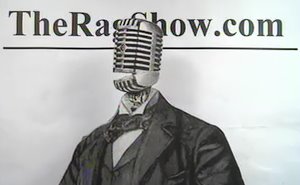
Another element I had in mind was a puppet video web series  project I was enamoured with a few years back -- The Rag Show. The two puppeteers -- Tim Lagasse and Jim Napolitano --used a lot of cut out figures to present their short, often political,skits.

..and the Erwin Piscator production of The Good Soldier Schweik produced in 1928 Berlin. The original cartoons in the original Czech satirical novel were tuned into life size figue cut outs in similar mode to what John Heartfield did here:


These theatrical references may seem weird but then, I make this stuff come together by 'performing' for the camera. I shoot myself with puppets in colour pencil style and then integrate the photographs into the comic panels.

Too easy. 


Aug 9, 2012

Comic and montage as a means to a medium


'Tis a wonderful moment when you work at something and it begins to come together, almost by itself.

Well this is me and my Mr Punch project

Coming together.

The elements are complicated.

First there is the drama, the story telling business, driven, as it happens, by character attribute and pre-existing use. I may parody puppetry but in the pitch there is more to mine than I at first thought.

Then there is the photography -- posing the subjects to get the best shot in the lighting conditions I'm working under.

Finally, comes the task of pulling the comic together panel by panel before  publishing online.

While I started with 'a' concept, I am surprised how much I can veer toward utilizing a mix of elements in creating the comic. Since I've gone back to using colour  there is no reason I cannot indulge myself  with collage and montage effects so long as the reading flows.

Reading so many graphic novels and comics of late I get to respect the inventiveness of both illustrators and writers. I am also exposed to how fluid and flexible the medium is.  

From what any one considers to be comics on paper -- new options have been developed such as the extraordinarily effective comic journalism -- especially Joe Sacco's wonderful graphic novels  on Palestine.

Joe Sacco: Palestine
Cartoons we presume we know about --  but to take actual events and turn them into comics allows  a certain engineering of perspective to be bought into being which is going to be different from straight written journalism or standard video about these same incidents.

Looking at what the comic journalists have to say -- especially Dan Archer  and  Sacco (see interview), of course -- and then reading the end product, what strikes me is how effective are their efforts. 

For me, this is a 'wow!' moment. 

After years of taking photographs or recording audio or shooting video and writing journalistic reports about 'events' I am mightily impressed with the way that a comic can/could tell the story of what occurred and why.

Even with photographs -- any report is going to limit itself to one or two shots, or, as happens nowadays online, to a slideshow. But as soon as you edit and  place the images  into a series of panels, add captions and whatever, you are, in effect, creating a comic -- except there is no drawing involved. Your placement or caption and commentary is nonetheless going to serve as a graphic representation of your topic. 

I take the view that it is better to use filters on your images so that they look unreal -- like they are indeed drawn or water coloured rather than simply photographed. I think it is important -- and here my Bertolt Brecht training shines through -- that the means to the medium is self evident to the viewer and that your effort is presented as something heightened and unusual (Brecht called it 'alienated').

Its' all about a different way to see.

This notion is what is driving my every other day creative efforts. 

"What if," I ask myself, "I can turn any event into a comic -- even the most mundane routines of my daily existence? "

I'm not saying I'm going to do that but anything could be comicified by firstly drawing or photographing and image of it; and, secondly, selectively arranging those images together while, as required, adding text.

It's Storytelling 101. 

Obviously a single image doesn't have to carry the weight of the whole story. Instead a 'comic'  has several images bought together as montage -- edited. That's what 'montage' means --  it's French  for "organize".

I'm finding that with modern digital cameras -- and mine is a very cheap miniature  device -- you can shoot any number of images in the context of 'the event' so long as you have a narrative plan and perspective you can later develop further when you come to editing, selecting and organising.

So it's not about the best of all possible shots but how you intend to format the flow and perspective  later when you edit and arrange the images you shoot.

Of course this is how you make a video. But video editing has its complications and for me the two primary ones are transitions from one clip to another and the time length of each clip.This has a lot to do with pacing and what the human eye and its mind can or cannot tolerate before the owner of the eyes protests.

With comics you are not  limited by the pressure of time and transitions  aren't so brutally demanding. Comic storytellers use a lot of  devices to move around both place and time. They also know that if they lose the reader's comprehension for a  moment they  always have the option to go back and re-read what they may have missed. On a film that ready rewind is not an easy choice as it will undermine the flow.

There is a difference, you see between a McLuhanist 'hot' and a McLuhanist 'cold'.

Comics, in contrast, are much more staccato -- panel by panel -- and much more self evidently outside us as a self evident medium -- much closer to reading a book -- than watching a film or video.  The identifier quotient is less and potentially the informational density is more.

It's not as though I've suddenly developed a novel POV on comics. I've been fascinated by narrative art for decades --especially the work of Pieter Breghel -- the 16th Century Flemish painter.

Breghel created 'comics' in the one panel that told stories as did William Hogarth, (another hobby of mine) et al.

So it's like all my chickens have come home...

Comic toolbox 

That said, I'm thinking that aside from a good comic making ap or program -- I use ComicLife -- and a digital camera, maybe the toolbox should also include -- esp for the serious comic journo -- some means to tape audio.

It is hard to shoot  photographs and scribble down quotes at the same time and audio will also allow you to insert 'notes to self.'  A great comic --  Maus -- is resourced from   the audio recording of the reminiscences of Art Spiegelman's father.

Unfortunately, while folk like Dan Archer do do it, converting a comic as is to video doesn't work very well and I really don't see the point for online consumption. Comics may make great movies -- consider A History of Violence, Persepolis, etc -- if animated or acted with flesh and blood folks, but still life images arranged together in a video is just another slide show.

And here's a knee up: comics made from photographs require no drawing skills. That may upset the old guard and and those who can actually draw -- but I think the graphic artsy-ness of comics is a bit over  rated.  A good comic has to rely absolutely on the strength of its  storytelling and the trim of its dialogue.

I likem my art -- and I love a lot of comic art -- but that's dress up for the main game. The irony is that how a comic is illustrated won't decide its message.


Jul 30, 2012

The Comic Masquerade

Click on images to enlarge view
Finally, after experimenting and negotiating a learning curve I suspect that I am now able to embrace a comic life. Since I am not keen to put in the hard yards at the end of a pencil or pen I have to make do by reworking photographs.

Being a Mac user I am currently combining  a couple of aps:
  • PhotoEffects which I'm using to rework --and often take -- the original photograph
  • Noir Photo  for later processing: enriching the contrast and focus -- as I'm after the sharp black background.
I hope that by standardising this editing protocol I can convert a range of different images to a standard comic format that will constitute my 'style'.

And I want to do that quickly without dramas.

Characters, situations, topics and whatever content are different , for now, from the form. I wanted the means, the medium, settled before  I could then explore the language.

Photo Comics are rare in the English speaking world outside of some Photonovels adapted from film or TV series. The term Fumetti (Italian for comic -- "litte puffs of smoke" ) is often deployed to describe these  but now that there are so many easy-to-use photo aps  available, who knows what may happen?

To give you an idea of what can be done, here are my four favorite Photo Comic sites online:
Inventive stuff. Creative. Some -- LifeStrips and Unsettled Skies -- are arty.  Obviously if you use Photoshop you are going to get a sharper, neater 'effect'. But me, I want to focus on the storyline --such as it may be -- and the dialogue. 
That way you are better placed to be optioned by Hollywood. (!)
I read a lot of graphic novels and while the art has its charms, my preference is for the pacing, dialogue and story telling. I nonetheless appreciate the POV compositions and my enthusiasm runs to film noir type perspectives -- expressionist stuff. 

It's like making a feature film but without having to work with actors. B grade film making perhaps with cheap actors.

I, on the other hand, have to act in my own 'comics' or find folk who will hold a pose for me while I take a photograph of them. 

For now, I'm not storyboarding what I make as I'm relying  on improvising the images and drawing on them for inspiration. 

But I want to advance to the stage where I sit down and write the thing and then use what I've written as the shooting script.

And filming may not be so difficult if you are Noir obsessed as I am. With noir you want sharp contrast , clear  outline, limited detail, exaggerated focus...and you can get that by using just one light source. That's where the shadows come from. Noir is all about harnessing shadows.

The appeal is that since my preference and background has been with masks  -- that's where I begin, at  the face. The scenery is not so important to me. It's like a Shakespeare play or street theatre or theatre in the round. The basics is da people relating to you or others. 

Why complicate things? Why introduce distractions?  I want to work within those limitations. That's my platform: was in theatre, same with comics.

A comic masquerade.

This means that you gotta go grotesque and exaggerate the gestures or the facial expression. It isn't a photo op for the mags or the family album. You're cartooning -- channeling caricature.

Again I have the advantage of having worked in puppetry -- Punch and Judy especially -- and that's what I'm after: that sort of cartoony grotesque. While you can do that performing with puppets they can't change their expression from scene to scene or from  panel to panel. In masked performance you rely on body gesture just as with puppets you move their little heads to suggest that the figure is speaking.

So as actors on a photograph, puppets are limited....but it is nice to use them. They work for peanuts.