.

Nov 22, 2011
Two useful documentaries on noir fiction
Useful? Maybe they are essential viewing if you want to get a feel for the scope of what's out there especially in the Nordic countries.

Nov 17, 2011
Dave Riley on Kurt Vonnegut

This is now...
Here's a rule of life: never go more than 10 years at a spell without re-reading Vonnegut. I mean ALL of Vonnegut you can get your hands on. So I'm back there on rewind, reading Kurt Vonnegut.
And starting back with Breakfast of Champions seemed like as good a place to start as any.
But then there is no beginning and no end to Vonnegut -- it's all one big story written in parenthesis. It's stuff that ambles through the universe and into our social and political lives like the musings of a indulgent Alien, who ,after so long on earth, has learnt to appreciate the locals.
Pity them too.
Always there is pity coming from Vonnegut.
***
This is 1993...The view from Tralfamadore
Fates Worse Than Death — An Autobiographical Collage of the 1980sBy Kurt Vonnegut
Vintage, 1992. 240 pp. $12.95
Reviewed by Dave Riley
Once upon a time artists were people; that is, they were for the people, by the people and of the people.
But all that changed. They began to fall back on themselves in search of a private vision, which in their lonely quest for profound expression made them incomprehensible to the rest of us. They tried very hard to tell us of our plight, but they had read so many books and thought so many thoughts that they forgot our language.
Then came Kurt Vonnegut. He wrote weird stories. People seemed to like him. His popular acceptance as a paperback writer rested on his literary prominence in the 1960s. He was a hero of youthful radicals, and his books sold in their millions.
Now 70 years of age, Kurt Vonnegut is still pumping it out.
Fates Worse Than Death is a freewheeling memoir of the '80s done as only he can. Recollections and anecdotes range through time, written with the wry wit and the sardonic good humour of an affable tolerance.
Vonnegut's idiosyncratic views are so profoundly human that he has not recovered from the fire-bombing of Dresden — which he witnessed as a POW in World War II — nor has he forgiven the United States government for the Vietnam War.
But he is not bitter enough to be satirical. "Listless playthings of enormous forces", is how he once described his fictional characters. In this most recent book, that listlessness seems to include himself. His attempted suicide and his mental breakdown are all part of the universal narrative. As many a Vonnegut devotee will tell you: so it goes.
Vonnegut really doesn't live in anyone's street directory. Formally a resident of the United States he seems to have his abode elsewhere, perhaps on his beloved planet of Tralfamadore.
Written from that perch his books have a quirky long view about them, where earthly time and place have little significance. In Galapagos — which he wrote in the mid-'80s — the human species is wiped out and replaced by a gene pool generated at the atomic bombing of Hiroshima.
In the books of Kurt Vonnegut the future comes uncomfortably close. The fates that are worse than death are really with us now, if only we could recognise them. Fortunately, surveying from a distance, Kurt Vonnegut is there to chart them for us.
***
If you haven't read Vonnegut, you don't know what you're missing. More than any other writer, I think he embraced the political promise of the sixties. It's almost impossible to consider that he could have had a career as a writer without a marriage with that broad insurgency. His initial success basically had to wait until that radicalisation began to kick in.
The period saw many novelists being taken up and embraced as radical chic: Albert Camus, Norman Mailer, Hunter S.Thompson, Herman Hess, Jean Genet, Allan Sillitoe, Gunther Grass, Yukio Mishima, Joseph Heller... (yes, primarily a list of males)but I doubt few were as generous as Vonnegut was in offering substance to mull over.
I think I've read Slaughterhouse Fivefive times over the past thirty years and I have tried to read ALL he wrote because there was so much there that was worth the reading, even though like a massive serial, the novels tend to merge with one another as often as the distant planet, Trafalmadore , becomes part of all these seemingly separate narratives. It's like this long line of montages:Cat's Cradle, Breakfast of Champions, The Sirens of Titan...
"and so it goes...."
Of course, Vonnegut -- he died this week at the age of 84 -- was no optimistic idealist. He was dogged by a very bleak vision indeed, affirmed in Dresden, that nonetheless was played out with such tension in his novels that you had to get caught up in the struggles this guy was having with himself. Vonnegut wasn't about insularity and angst or about giving up(despite his unsuccesful attempt at suicide ).
In Slaughterhouse Five, Billy Pilgrim witnessed the fire bombing of Dresden not because fate or some god willed it, but because other men with morals and interests beyond Billy's comprehension, put him there. It wasn't his fault.
And Vonnegut thereafter kept on asking: why?
And Billy, like all of Vonnegut's protagonists,were victims of this nameless barbarity which for some unknown reason they had the capacity to survive as though survival -- humanely and desperately -- was all you could hope for.
In his way, Vonnegut was a bookend to Harold Pinter because they kept addressing the savagery that stalks us from without and, I guess in the case of Vonnegut, the only way he saw you could protect yourself from it was to ignore it and adopt an alienated & sterile existence that was such a shallow shell that to go looking for anything else was to court madness or a stint on a planet far far away.
I'm having trouble here trying to describe the way Vonnegut pitches all this. He is/was unique as a writer. A science fiction novelist -- who wasn't. That's because his stories were about the here and now rather than fictional futures. These were not hypotheses, at all, but exercises in lives lived in alienation under capitalism.
KV:" …I have wanted to give Iraq a lesson in democracy—because we’re experienced with it, you know. And, in democracy, after a hundred years, you have to let your slaves go. And, after a hundred and fifty years, you have to let your women vote. And, at the beginning of democracy, is that quite a bit of genocide and ethnic cleansing is quite okay. And that’s what’s going on now."-- Appearance on The Daily Show (September 2005)
***
Vonnegut: This stuff-that-he-wrote.
The very best thing about someone dying is, as the late Kurt Vonnegut is sure to agree, that you have an excuse to think about them.
"Oh," you say, "Kurt Vonnegut is dead? He wrote stuff."
And so it goes that you wonder about this stuff-that-he-wrote.
I did that. I went to Wikipedia and vetted the bio. I then thought I had a very little bit of Vonnegut to catch up with before I could put him to rest.
So I tracked down and read his last book, A Man Without A Country.
Darn good book. In his eighties Vonnegut is still very much Vonnegut. It was so poignant that it almost moved me to tears for its celebration of living even if that in turn is dogged by a massive desperation.
The thing was almost wise and wise isn't a term so much allowed today.
Headline:Wise old Vonnegut dead at 84.
Stiff bickies , Kurt. I guess it had to come some day.
As for me, I get to exploit the opportune excuse offered by Vonnegut's dying to go read what I missed and re-read what I hadn't.
So after I put down Timequake everything else is a going to be e-read.
That's what I call a fortunate death.
You should try to do that more often, Kurt.
Nov 16, 2011
Line Dance Me

By definition, a line dance is a choreographed dance with a repeated sequence of steps in which a group of people dance in one or more lines or rows without regard for the gender of the individuals, all facing the same direction, and executing the steps at the same time.
I guess as far as we all know or care, line dancing is presumed to be boot scooting type dances where folk wear leather boots and Stetson hats while dancing to tunes like "Achy Breaky Heart". But a 'line dance' can be any dance done in unison by a group of people.
What Country and Western has given us is the social and cultural phenomenon that is now so common that there is likely to be a line dancing group in cooee of your doorstep.
Often line dancing sessions are aimed at retirees and the aged because while exercising bodies they are not strenuous activities.
So there's a lot of bias engineered in what we may perceive to be line dancing: it's country and western music; it's for the aged; mainly for women (because they don't have to wait to be asked to dance) and it's ever so hokey.
I admit I shared some of that view. I used to organise local community festivals and the local line dancers who always performed fitted the stereotype to a T. The line dancers and I did many a gig with me working as emcee. We put on a very jeans, belt buckle and boot scoot show.
But something happened -- to me anyway. I have an unbridled passion for Zydeco Music -- the bluesy dance music of Southern Louisiana Creoles -- and in my desire to dance the Zydeco dance I discovered that there has been a major change in line dancing form: the boot scooters don't have it all to themselves.
.
Amen and Hallelujah! While I am a dedicated aficionado of American Old Time Roots music and used to play the clawhammer banjo in sync with the traditional music of North Carolina and West Virginia, a lot of modern 'country' music turns me right off.
It seems to live out its own caricature. But a year ago we moved to the Caboolture district here in South East Queensland and this neighborhood boasts its own Urban Country Music Festival -- and besides, Keith Urban comes from here. With its annual calendar of rodeos and gymkhanas, acre upon acre of horse farms and the national headquarters of the Australian Professional Rodeo Association in the main street -- our 'suburb' is consciously countrified.
So in this context, and with some trepidation that I was letting my music snobbery down, I went to a local line dancing class.
To my delight, line dancing ain't all boot scooting. The country and western tradition has imbued line dancing with moves, forms and techniques that are easily adapted outside the ten gallon hat template. ... and adaption has proceeded a pace. Line dance here and you are as likely to be doing the Zorba The Greek dance as the schmaltzy beginners dance to the C and W kitschy tune, Elvira.
As well as this eclectic mix of tune and footwork, the sheer massive scale of the phenomenon -- as it now is a truly international obsession -- means that this huge community world wide gets to share its dance choreography through medium such as YouTube.
This is where engineering and consensus rules because line dances are known by their set choreographies rather than their tunes. That means, for instance, while Elvira may be a single song -- it is also a dance that can be performed to other tunes.
This makes 'line dancing' very eclectic and potentially extremely adaptable. Flash mobs are line dances, aren't they, if choro is involved? But beyond that what seems to be happening in the United States , emanating from the Southern States like Texas and Louisiana is a very conscious attempt to adapt soul, zydeco, rhythm and blues, to the line dance format.
Here's an example: T.K Soul's Zydeco Bounce is a very conscious attempt to package Southern Soul with a Zydeco line dance delivery.
In fact when you do your homework,what used to be the on stage dance antics of performers like James Brown is now being replicated in various line dance moves by Afro American choreographers working in the community. So the permutations are endless.
This phenomenon is democratising dancing in a way that seems quite novel. After the various waves of dance fashion which have washed over us we seem to be have on offer a dance form that any one can do: whether geriatric or junior. And there's no strictly ballroom about it nor any need to compete.
Tt may be 'exercise' but it transcends the sterile focus of aerobics.
Tt may be 'exercise' but it transcends the sterile focus of aerobics.
It's also gender neutral.
My family spent years ferrying our daughter to Irish Step Dancing events, competition and classes, and while the activity was always culturally significant -- my name's 'Riley' after all -- it was always exertion for the young and nimble. After a certain age, most Irish dancers retire.
Step dancing a la Riverdance may indeed be a line dance but it isn't something Grandma would be getting up for.
So in an odd way, we have to dip our lid to the many aged line dancers and the c and w aficionados who have preserved an engagement that is now being offered to the rest of us despite our seeming preference for ignorance and two left feet assumptions.
We also get to learn that group dance fun doesn't have to end with the Macarena. nor do we have to be sentenced to the rank commercialism and fitness obsession of Zumba.
We also get to learn that group dance fun doesn't have to end with the Macarena. nor do we have to be sentenced to the rank commercialism and fitness obsession of Zumba.
“Dance first. Think later. It's the natural order.”- Samuel Beckett
Want more line dancing? Check out the politically emergent comrades-- VIDEO Nepalese Maoists do Saturday Night Fever. As for the ethnic and cultural mix, consider the Bollywood influenced Hare Ram line dance as choreographed by Malaysian Jennifer Choo Sue Chin. So when it comes to 'Screwing the light bulb and patting the dog' (lingo for Bollywood dance moves -- you can attend Bollywood line dance classes too) -- the world is your collective oyster: Below we have a Indonesian line dance, taught in English by an Indonesian to a class of young people in Norway....
Nov 15, 2011
CRIME FICTION : There is no mourning with dignity: Karin Fossum
 |
| Karin Fossum |
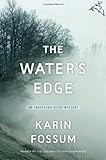
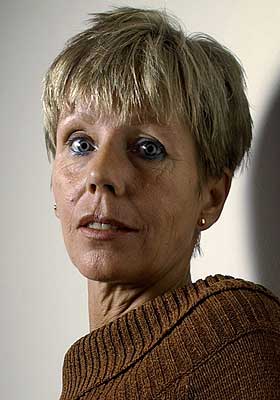
I think Karin Fossum is the most emotionally interesting of crime writers. She moves you and makes you think about our relationships to one another in our communities. Regional Norway becomes a crucible of the rest of our existence and what assumptions may rule our perceptions. Her stories aren't so much about Inspectors Konrad Sejer and Jakob Skarre but about us. These coppers are mere conduits to confronting underlying conundrums. This story has a lot to say about the relationships mothers have with their young sons and sons have with their carers; about the yearning to have children and the struggle of child rearing.
The criticism levied at this novel -- that it indulges pedophilia is bunkum. In Fossum's universe there is no strict separation between good and evil. The medley of humans existing, of growing up and ageing in cohabitation with one another -- in the communities bequeathed to us -- is far more complex and engaging that the simple rule of law. Law, after all won't explain brutality -- it serves at best only as a means to assuage it.
In that sense Fossum isn't a very noir novelist. Darkness isn't as pervasive as the over bearing complexity that we have to deal with every day especially among the other humans with whom we co-exist.
But then Fossum is always open to lightness (and being! if you want to be truly empathetic) , to hope and the pleasures that we can obtain through knowing others -- including, it needs to be said, faithful dogs! We need to celebrate these pleasures because when we lose them -- such as through murder -- the loss is the more difficult to bear.
Pain is given absolute respect by Fossum. It is never a plot device. Pain and anguish, rather than murder and sin, are the most human of our collective existence. It is what enriches our humanity. It's not the dirty deeds --- dirty and brutal as they may be -- but that we must all learn to live with the weight of their dead hand.
So for Fossum the prospect of loss -- of having loved ones brutally taken from us -- is the most painful of what we may have to bear.
The funeral described in the novel captures that anguish so very well. After a ritualised, highly theatrical ceremony, seemingly beautifully engineered, the facade falls apart:
"Then something happened. No one was prepared for it. The vicar was shocked, everyone could see that. Some people clasped a hand over their mouth in fear, and Sejer felt an icy chill shoot down his back. Elfrid Løwe started to scream. The service had helped her maintain her composure, she had clung to the vicar's voice, but now she was screaming uncontrollably heartbreakingly, a protest which made people jump in their pews. The screams came from deep within her and pushed their way out with a force no one would have believed such a tiny woman possessed. For the best part of an hour the vicar had built a fragile construction of comfort and resignation. Now she tore it down. She screamed and she demolished it and people could no longer mourn with dignity."
Mourning with dignity? Evil doers will be punished (if not by us then by some god)? Law and coppers can make it all better again?...that's what society asks of us, or at least, asks us to believe in.
That's not how Karin Fossum tells it.
Subscribe to:
Posts (Atom)