

Showing posts with label Africa. Show all posts
Showing posts with label Africa. Show all posts
Feb 9, 2011
Oct 12, 2009
VIDEO Fighting against water privatisation in South Africa
 Currently Watching: Water is Ours (Amanzi Ngawethu)
10 mins (Medium 20MB)
Authorship: Coalition Against Water Privatisation, Centre for Applied Legal Studies, Anti-Privatisation Forum, Friction Films, Unitarian Universalist Service Committee.
Please spread far and wide, show in your community, blog, link to your website and social networks. The films are updated as events unfold in South Africa. There are 10 minute, 2 minute and 5 minute edits, all showing on friction films.blip.tv. Downloads available. Many thanks.

Oct 5, 2009
AUDIO:Economic crisis effects treatment of HIV/AIDS patients in South Africa
According to a recent Oxfam report, at least 75 million fewer children in poor countries are likely to attend school and 8.6 million fewer people could have access to HIV/AIDS treatment if aid is diverted to help poor countries fight climate change.
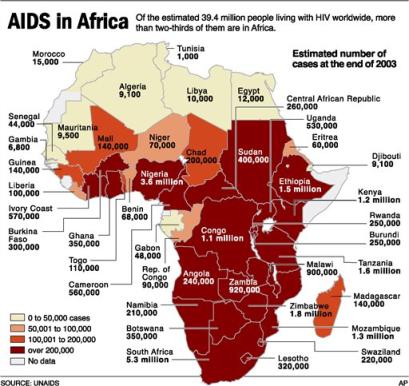
One country where the global economic crisis is affecting efforts to treat AIDS patients is South Africa. Here the UN estimates that 5.7 million people live with HIV/AIDS and 18 percent of those aged 15 to 49 have contracted the virus. FSRN´s Nathan Moore reads for our reporter Gabe Matthews who recently visited an AIDS clinic in Capetown.
One country where the global economic crisis is affecting efforts to treat AIDS patients is South Africa. Here the UN estimates that 5.7 million people live with HIV/AIDS and 18 percent of those aged 15 to 49 have contracted the virus. FSRN´s Nathan Moore reads for our reporter Gabe Matthews who recently visited an AIDS clinic in Capetown.
Aug 5, 2008
Bambatha - War of the Heads 1906
 Watch this video below on LeftCLick TV.
In 1905, the Natal colony introduces a tax on the heads of all adult men. Coming close on the heels of land grabs, war and famine, the Poll Tax threatens to destroy African patriarchy and with it, tradition itself. Many young men are angry and look to their chiefs for leadership. Fearing the might of the colony, African chiefs are split over how to respond.
When chief Bhambatha becomes a scapegoat for the British, he has no option but to fight. From a reluctant young chief, Bhambatha evolves into the spirited leader of an unified African force that challenges the very core of British rule.
CREDITS:
Directed by Rehad Desai
Written by: Anita Khana
Produced by: Feizel Mamdoo
Available on DVD
$20 or R140.00

Buy the high-resolution download for $10 or R70

Jun 28, 2008
NEW! Links Dossier #2: Class Struggle and Resistance in Zimbabwe
 In the second Links Dossier, in an easy to print a PDF format, Links - International Journal of Socialist Renewal makes available essential historical background material on the struggle for socialism in Zimbabwe, the degeneration of the regime and party of Robert Mugabe and the views of the Zimbabwean socialist movement on the way forward for the struggle for democracy and radical change.
 Contents:
Revolutionaries, resistance and crisis in Zimbabwe
His Excellency Comrade Robert: How Mugabe’s ZANU clique rose to power
Zimbabwean socialists: `No to a government of national unity! Only united mass action will defeat Mugabe!'
Click HERE to download.
For other Links Dossiers, please click here.
Apr 24, 2008
Equity in energy consumption: Getting the prices right for people and the environment
Workshop delivered at the Climate Change Social Change Conference April 12th, 2008
Speaker:
Patrick Bond, University of KwaZulu-Natal; editor of Climate Change, Carbon Trading and Civil Society
Popout
Apr 1, 2008
Patrick Bond on Carbon Trading
From the latest episode of Africa Past & Present:
 Patrick Bond (Director of the Centre for Civil Society, University of KwaZulu-Natal) talks to us about his new book Climate Change, Carbon Trading and Civil Society: Negative Returns on South African Investments (co-edited with Rehana Dada and Graham Erion, 2007). Bond discusses carbon trading’s effects on global warming, critiques free market approaches to climate change, and charts the rise of African grassroots movements for environmental justice.
Note: Africa Past and Present is now available for subscription on its website.
Popout
Mar 16, 2008
Africa Past & Present Podcast - Episode 5 now available
Episode 5 of Africa Past and Present - the podcast about history, culture, and politics in Africa - is now available at:
http://afripod.aodl.org/
Bush's recent Presidential visit to Africa invites deeper analysis. In this episode, Professor Dave Wiley (African Studies Center Director at Michigan State University) examines the militarization of US foreign policy in Africa and its potential implications. We also discuss why African Studies scholars (e.g. ACAS and ASA) and African Studies Centers rejected funding from US military and intelligence agencies.
Africa Past and Present is hosted by Michigan State University historians Peter Alegi and Peter Limb. It is produced by MATRIX - The Center for Humane Arts, Letters, and Social Sciences Online at MSU (http://www.matrix.msu.edu). Listen and subscribe to the fortnightly
podcast at: http://afripod.aodl.org/
http://afripod.aodl.org/
Bush's recent Presidential visit to Africa invites deeper analysis. In this episode, Professor Dave Wiley (African Studies Center Director at Michigan State University) examines the militarization of US foreign policy in Africa and its potential implications. We also discuss why African Studies scholars (e.g. ACAS and ASA) and African Studies Centers rejected funding from US military and intelligence agencies.
Africa Past and Present is hosted by Michigan State University historians Peter Alegi and Peter Limb. It is produced by MATRIX - The Center for Humane Arts, Letters, and Social Sciences Online at MSU (http://www.matrix.msu.edu). Listen and subscribe to the fortnightly
podcast at: http://afripod.aodl.org/
Popout
Feb 1, 2008
Post election violence in Kenya
from Pambazuka News Podcasts
Since the December elections in Kenya an estimated 600 people have died as a result of the unrest, and another 100,000 at least have been displaced. The violence erupted after incumbent Mwai Kibaki was sworn into office in the midst of acusations that the election was rigged, led by opposition candidate Raila Odinga. International observers have called the election "flawed." In this interview Firoze Manji speaks on post election violence in Kenya as a symptom of long term debates within Kenya surrounding the constitution, and a legacy of Kenya's history under colonialism.
Since the December elections in Kenya an estimated 600 people have died as a result of the unrest, and another 100,000 at least have been displaced. The violence erupted after incumbent Mwai Kibaki was sworn into office in the midst of acusations that the election was rigged, led by opposition candidate Raila Odinga. International observers have called the election "flawed." In this interview Firoze Manji speaks on post election violence in Kenya as a symptom of long term debates within Kenya surrounding the constitution, and a legacy of Kenya's history under colonialism.
Jan 17, 2008
Jan 8, 2008
The Kenyan election
LeftClick has been offering the excellent Pambazuka Podcast (below this post) as a online audio resources for some time. But theres' no audio available from there on the Kenyan events. Nonetheless, Pambazuka has published the following selection of reports and commentaries which are well worth reading.
It is the Kenyan people who have lost the election
Firoze Manji (2008-01-03)
Kenya is entering a protracted crisis. No one really knows who actually won the presidential elections. Given the overwhelming number of parliamentary seats won by the ODM and the dismissal of some 20 former ministers who lost their seats, it seems likely that the presidential results probably followed suit. But it is no longer really a matter of who won or lost. For one thing is certain: it is the Kenyan people who have lost in these elections.
Drama of the popular struggle for democracy in Kenya
Horace Campbell (2008-01-03)
This analysis by Horace Campbell argues that the calls for peace and reconciliation by the political and religious leaders will remain hollow until there are efforts to break from the recursive processes of looting, extra judicial killings, rape and violation of women, and general low respect for African lives. The analysis is presented as a drama of three acts.
Kibaki must back down
Victoria Brittain (2008-01-03)
Victoria Brittain writes that Kenya has sworn in a president who wasn't elected with little protest from the west. The flawed poll has to be rerun if the violence is to end.
No justice, no peace!
Onyango Oloo (2008-01-03)
Onyango Oloo dissects the "save our country" media blitz ad argues that behind the non-partisanship approach might actually be making a case for a Mwai Kibaki presidency.
The choices before us: Reflections on Mwai Kibaki and the 2007 Kenya General Elections
Ngugi Wa Thiong'o (2007-12-17)
Ngugi Wa Thiong'o reflects on Mwai Kibaki's presidency, the proliferation of what he terms paper parties, and the need for African democracy to speak for and to African peasants and workers - the marginalized majority.
Oct 11, 2007
AFRICAN ORGANISATIONS IN YOUR AREA
Dear comrades,
In the light of the Howard government's deliberate playing of the race card, and the attacks on Africans in Melbourne, I am sending all branches and local campaigns the following link, which gives you African organisations in your area
http://www.africanoz.com/af_directory/comm.html
Comradely,
Dick Nichols
National Coordinator
Socialist Alliance
In the light of the Howard government's deliberate playing of the race card, and the attacks on Africans in Melbourne, I am sending all branches and local campaigns the following link, which gives you African organisations in your area
http://www.africanoz.com/af
Comradely,
Dick Nichols
National Coordinator
Socialist Alliance
Sep 7, 2007
Zimbabwe
from Michael Sozinyu
The crisis in the country has reached acute levels, which clearly Mugabe has no solution to. Up to June this year local capitalists and the imperialists powers had managed to create a total economic crisis .A crisis, which allowed them to make super profits at the expense of ordinary poor people. Prices were going up almost twice a day in a way designed to try and make the country ungovernable as much as possible so that by December the inflation rate would have reached unprecedented levels in the world.
This was likely to trigger massive uprisings against Mugabe, just like the late 90s food riots,
Mugabe was quick to realize this and did his usual way. In 2000 to survive a total defeat by MDC Mugabe had to make some partial concessions with capital and adopt an anti ESAP stance giving land to peasants, introducing price controls and etc. This ensured his victory against MDC, which was a party, formed out of working people’s fights against neo-liberal ESAP The same he did now, he had to urgently come in and stop the capitalists from making super profits by introducing price controls and even threatening to nationalize intransigent companies.
For Mugabe had no control over production and distribution of goods bosses easily sabotaged and stopped production-causing shops to run on empty shelves. We are almost back to the same situation before price controls. Goods are now only available on black market on even higher prices than before. Queues for a few still available basics have resurfaced.
Over the past weeks the government has gradually been backtracking on prices allowing shops to increase prices of most goods to what they call reasonable levels. But at the same time the government has passed as law a bill makes it impossible for capitalists to increase prices without the approval of the incomes and pricing commission, which he set. Wages and salaries have been frozen at very low levels than the current poverty datum line.
Mugabe has now got breathing space from both regional and local pressure he used to get .SADC talks aimed to bring sanity in Zimbabwe recently failed with South African president Mbeki who has been behind the initiative describing the Zimbabwean situation as an exaggeration of reality .The region is now recognizing Mugabe as a genuine anti imperialist with recently the Zambian President Mwanawasa who once described Zimbabwe as a “sinking titanic”, having to deport hundreds of Zimbabwean activists who wanted to attend SADC Summit in Zambia and demonstrate against Mugabe. Mugabe had a standing ovation when he got in Zambia as a living hero against imperialism yet people are suffering in Zimbabwe.
Despite all this Mugabe has no solutions to the economic crisis affecting the country now , as the country is going through massive imperialist sanctions coupled with local capitalist economic sabotage .This might still lead people to revolt against him , but he needs to survive up to March next year elections .
Hoping that he will win the elections and forge an elite settlement with the MDC elites and proceed with neo- liberal policies. This makes him eager to keep an eye on prices even on a less radical position up until elections and thereafter he lets the cat out.
The opposition is blind on this they are rushing on parliamentary seats to contest for they are only interested on peripheral personal benefits entitled to MPs . as we have seen recently some MDC MPs receiving some tractors and farming implements from Mugabe If ever there is a time when the regime is at its weakest this is the time .It is clear that Mugabe has no solution to the economic crisis of this country only what he wants is ensure 2008 victory at any costs hence all these political maneuverings.
The opposition is failing to take advantage of Mugabe`s impotence in resolving the economic woes of this country and mobilize people in townships. There is no water and electricity in townships, people are not happy, this is the opportunity to link such demands and build a powerful movement against Mugabe around bread and butter issues.
It is not only us who sees an imminent dismal electoral defeat of MDC , but some of their long time supporters in the NCA and some of its rank and file who attended a recent public meeting organized by ZimRights where our was a speaker . It turned out to be more or less an ISO meeting as speaker after speaker agreed with our position on the elections saying there is need to boycott the elections as participating will be legitimizing Mugabe victory.
This is the time rather than wasting energies and resources in preparing for elections, which Mugabe has already won, the MDC should now unite with other forces in building a genuine united front movement. A movement that unite all progressive civil society groups labour, socialists, human rights groups, NCA, and other social movements including ZSF. Organize demonstrations around bread and butter issues including the right to ARVs and food. This is the only way to bring back confidence in people than to hope an electoral victory over Mugabe.
Mike sambo
The crisis in the country has reached acute levels, which clearly Mugabe has no solution to. Up to June this year local capitalists and the imperialists powers had managed to create a total economic crisis .A crisis, which allowed them to make super profits at the expense of ordinary poor people. Prices were going up almost twice a day in a way designed to try and make the country ungovernable as much as possible so that by December the inflation rate would have reached unprecedented levels in the world.
This was likely to trigger massive uprisings against Mugabe, just like the late 90s food riots,
Mugabe was quick to realize this and did his usual way. In 2000 to survive a total defeat by MDC Mugabe had to make some partial concessions with capital and adopt an anti ESAP stance giving land to peasants, introducing price controls and etc. This ensured his victory against MDC, which was a party, formed out of working people’s fights against neo-liberal ESAP The same he did now, he had to urgently come in and stop the capitalists from making super profits by introducing price controls and even threatening to nationalize intransigent companies.
For Mugabe had no control over production and distribution of goods bosses easily sabotaged and stopped production-causing shops to run on empty shelves. We are almost back to the same situation before price controls. Goods are now only available on black market on even higher prices than before. Queues for a few still available basics have resurfaced.
Over the past weeks the government has gradually been backtracking on prices allowing shops to increase prices of most goods to what they call reasonable levels. But at the same time the government has passed as law a bill makes it impossible for capitalists to increase prices without the approval of the incomes and pricing commission, which he set. Wages and salaries have been frozen at very low levels than the current poverty datum line.
Mugabe has now got breathing space from both regional and local pressure he used to get .SADC talks aimed to bring sanity in Zimbabwe recently failed with South African president Mbeki who has been behind the initiative describing the Zimbabwean situation as an exaggeration of reality .The region is now recognizing Mugabe as a genuine anti imperialist with recently the Zambian President Mwanawasa who once described Zimbabwe as a “sinking titanic”, having to deport hundreds of Zimbabwean activists who wanted to attend SADC Summit in Zambia and demonstrate against Mugabe. Mugabe had a standing ovation when he got in Zambia as a living hero against imperialism yet people are suffering in Zimbabwe.
Despite all this Mugabe has no solutions to the economic crisis affecting the country now , as the country is going through massive imperialist sanctions coupled with local capitalist economic sabotage .This might still lead people to revolt against him , but he needs to survive up to March next year elections .
Hoping that he will win the elections and forge an elite settlement with the MDC elites and proceed with neo- liberal policies. This makes him eager to keep an eye on prices even on a less radical position up until elections and thereafter he lets the cat out.
The opposition is blind on this they are rushing on parliamentary seats to contest for they are only interested on peripheral personal benefits entitled to MPs . as we have seen recently some MDC MPs receiving some tractors and farming implements from Mugabe If ever there is a time when the regime is at its weakest this is the time .It is clear that Mugabe has no solution to the economic crisis of this country only what he wants is ensure 2008 victory at any costs hence all these political maneuverings.
The opposition is failing to take advantage of Mugabe`s impotence in resolving the economic woes of this country and mobilize people in townships. There is no water and electricity in townships, people are not happy, this is the opportunity to link such demands and build a powerful movement against Mugabe around bread and butter issues.
It is not only us who sees an imminent dismal electoral defeat of MDC , but some of their long time supporters in the NCA and some of its rank and file who attended a recent public meeting organized by ZimRights where our was a speaker . It turned out to be more or less an ISO meeting as speaker after speaker agreed with our position on the elections saying there is need to boycott the elections as participating will be legitimizing Mugabe victory.
This is the time rather than wasting energies and resources in preparing for elections, which Mugabe has already won, the MDC should now unite with other forces in building a genuine united front movement. A movement that unite all progressive civil society groups labour, socialists, human rights groups, NCA, and other social movements including ZSF. Organize demonstrations around bread and butter issues including the right to ARVs and food. This is the only way to bring back confidence in people than to hope an electoral victory over Mugabe.
Mike sambo
Aug 17, 2007
The ‘Zumafication’ of Left Politics in the Alliance

A Critical Review of the ANC Policy Conference & the SACP 12th Congress
by Dale T. McKinley
The SACP and COSATU have been fiddling with the same strategic and political choice for over 15 years now. First choice: to be junior partners in an Alliance they will never run/control (but might have key positions in) and thus practice a politics of offering critiques of existing policy implementation and arguing for policies that have a more pro-poor character/more state involvement, engage in occasional campaigns and activities designed to ‘show’ that the working class is still a force to be reckoned with and simultaneously continuing to be part of an ANC electoral machine and to participate in an ANC-run state through its various institutional mechanisms. Second choice: to go back to the basics of organising and mobilising the poor and working class (which must include real, practical alliances with community organisations and social movements) based on a radical programme of demands for the redistribution of ownership and wealth that will act as an organisational and political base to both shift ANC/government policy - not through insider bargaining/politicking but through mass mobilisation and class struggle - and to re-build a genuine left political and organisational power-base to contest power relations within SA society (something which is not simply reducible to elections and running as an electoral force separate from the ANC).
The problem is however, that the fiddling has been just that – the second choice has never really been on the agenda. As a result, they have continued to play the Alliance political ‘game’. While this have contributed to minor policy shifts and occasional genuflections by the ANC/ government towards mitigation of rising inequalities and poverty, these have not happened in isolation from the myriad of protests and mobilisations that have taken place outside the SACP-COSATU nexus and which have arguably been just as responsible for various policy shifts and the more recent rise in political contestation within the Alliance. Indeed, the ANC is probably more wary of poor community uprisings and disillusionment with ANC delivery and socio-economic progress than they are with the regular sniping and critiques of the SACP/COSATU.
The unfortunate but predictable result has been that the politics and practical work of the SACP and COSATU have become, over the last few years, tied directly to what is going on inside the ANC-Alliance in direct proportionate relation to intensifying personal and positional power struggles. This is the logical outcome of such an approach/politics and it has effectively paralysed the SACP/COSATU’s ability to organise and mobilise on a genuinely practical, working class/poor – centred pole, where their programmes, struggles and critiques are actually put to the test in real struggles happening on the ground and in the arena of democratic contestation for societal power.
The recently held ANC Policy Conference and SACP 12th Congress reflect this state of affairs in the form of the dictates of the personal/political battle between the Mbeki and Zuma ‘camps’ – with preceding mobilisation campaigns and practical work tending to ape this contest (i.e., whether it will, or won’t, take forward the personal positions and accompanying politics of this or that ‘camp’). The fact that the SACP and COSATU have publicly stated that the outcomes of the ANC Policy Conference represent a victory for ‘left forces’ is clear indication of this - despite the fact that there was nothing in the outcome of the ANC Policy Conference that would indicate any kind of radical shift from what has previously been the case (i.e.. a stated commitment to a ‘developmental state’ and for better functioning of the Alliance etc.).
Similarly, the SACP 12th Congress was mostly dominated by the politics of personality and positionality - who would/would not be elected to leadership positions based on what ‘camp’ they belong to as well as the debate over electoral positioning depending on what happens at ANC Congress in December (read: wait and see if Zuma wins the leadership contest and if so, then this will determine the strategy and tactics of the SACP). It is a sad state of affairs – a situation in which the largest and most long-standing ‘left’ party in South Africa is effectively held hostage to the outcomes of personal/intra-organisational and patronage battles within another party and, in which it’s own programme and politics is also effectively moulded by the same battles. From the outcome of the leadership elections at the SACP Congress, it is clear that those who ‘won’ and those who ‘lost’ were largely defined by what ‘camp’ they supposedly inhabit (in this case, a clear ‘victory’ for those in the Zuma/Nzimande ‘camp’ and a clear ‘loss’ for those supposedly allied to the Mbeki/Nqakula ‘camp’). Sadly, there was very little evidence of any clear ideological and/or organisational criteria being upheld as the main arbiter of choice for leadership positions. As one Congress delegate succinctly put it, one of the main reasons why Mbeki did not show at the Congress, “could be that he would not want to walk into Zuma’s den”.
What makes things even worse is the fact that the person on whose shoulders so much of the fortunes, political energies and organisational decisions of the SACP are now being placed, is not even an active member of the party itself and has shown, time and again, that his own political and ideological inclinations are neither communist nor even socialist but are defined by what will take his own position and power forward. In other words, saying what is ‘popular’ despite there being no indication of any meaningful capacity nor commitment to see through the actual implementation of what is being said/preached. This is also consistent with what came before the Zumafication of SACP/COSATU politics – the Mbekification of the same.
Prior to the dominance of the now raging Zuma-Mbeki battle, the SACP’s (and to a lesser extent COSATU’s) politics and organisational direction was largely defined by what Mbeki represented/was doing in government. This meant fighting (or at least spoiling to fight) the pro-capitalist policies of his government and his political control of the ANC by positioning itself as a counter-Mbeki force within the Alliance and as the real inheritor and prosecutor of the ANC’s National Democratic Revolution (NDR) legacy. The alternative – acting as an independent force of the left with both a comprehensive critique of, and a programmatic path to overcome, capitalist relations of production and the inherent exploitation and oppression it demands, as an active mass force of the poor against the policies and politics of the ANC under Mbeki’s leadership and as a political party capable and willing to offer the poor/working class both a organisational home and a political identity defined by what it is and not simply what/who it is against – has never really seen the light of day.
All of this begs the question: Where is the concrete evidence to confirm that the ANC has “shifted to the left” as Nzimande claimed at the SACP Congress? Is it contained in ANC Policy Conference resolutions about a ‘developmental state’ or in references to expanding certain social services and promises of basic service infrastructural delivery? Is it to be found in the draft Strategy and Tactics document that, as ANC Secretary General, Kgalema Montlanthe, admits, “does not propose a substantial departure from the vision, character and tasks of the ANC … but does seek to articulate these in a more precise manner”. Methinks not. The real assessment/ judgement should be made in relation to what is actually happening where it most counts – on the ground, in the daily lives of the majority. Two further question then beckon: What was the practical, ‘left’ way forward provided at either the ANC Policy Conference or the SACP Congress on water cut-offs, pre-paid water meters/the provision of adequate water for the poor, the housing crisis and evictions, the decrepit state of the public health care system, the crisis of public education, the complete lack of any meaningful urban and rural public transport system and the systemic nature of the unemployment crisis? And: Who exactly were the respective delegates talking for and talking to?
Ironically, it is ex-DA politician and now public liberal intellectual Raenette Taljaard who has captured the essence of what emerged from the ANC Policy Conference, aptly calling it, “the shade of the variety of capitalism under a ‘developmental state’ banner …”. The reality is that all the ANC (and by default, the government it presides over) has done is to more fully recognise that the reality of increasing socio-economic inequality and political (read: electoral) dissatisfaction amongst the poor represents a real threat to both their longer-term hold on political/state power as well to the organisational continuance of the alliance (which the ANC still finds extremely useful as a foil against the actual possibility of an independent left/working class force outside of the alliance – and thus not organisationally controllable and politically manageable).
This recognition has led to genuflective nods in the direction of greater infrastructural spending (although most of this has nothing to do with poor/working class communities but much more to do with the interests and demands of corporate capital and the seemingly insatiable need of the political/economic elite for grandiose projects and affirmation from global elites that they are now real players on the global scene and can ‘deliver’ things such as the World Cup), slight increases in social grants, relatively small increment increases in public sector salaries and much more rhetoric about the need to control/discipline the ‘free market’ and listen more attentively to the voices/cries of the poor. This surely does not constitute a meaningful and serious ‘shift to the left’ but rather an astute politics on the part of the ANC – both in relation to the ANC’s own chosen ideological path (i.e., a deracialised capitalism dressed up in the language of the NDR) as well as in relation to the ongoing personal and patronage conflicts within the ANC itself - as a direct means of lessening the appeal of the populist politics of Zuma.
Indeed, it would appear that the SACP (and COSATU) have been ensnared in the political game that the ANC has constructed and which has been playing itself out over these last few years (and more specifically, over the last year). Thus, can their respective leaderships make the incredibly dubious claim that the ANC Policy Conference was a ‘victory for the left’ and that the politics that they have pursued over the last while has actually been the defining factor in this ‘shift’, while simultaneously claiming, as Cronin does, that such a politics has been ‘sober and intelligent’. This is really just another way of saying that there was really no other option, that it is ludicrous to think about, or worse to actualise, either leaving the ANC/Alliance or forging a fighting programme of the working class/poor separate from the NDR-ANC-Alliance axis and testing its popular and democratic applicability with those they claim to represent. In the absence of another choice being contemplated, what we continue to witness (and have again witnessed at the recent ANC Policy Conference and SACP Congress) is the repetition of the same manta – namely, that the left in the Alliance has to ‘manage’ the relationship with the ANC and now, given the evident shift to the left, even more closely ‘manage’ the implementation of the developmental ‘agenda’.
COSATU General Secretary, Zwlenzima Vavi, once again confirmed this with his comments at the SACP Congress, in which he complained (for the umpteenth time) that the real problem is that, “the alliance is not driving transformation together, which creates divided loyalties”. As a result Vavi said, COSATU “has called for the restructuring of the alliance so that no single component or individual in the alliance determines strategy and deployments”. It is as though if something is repeated often enough, people (in this case those attending the SACP Congress) will actually believe it. Does Vavi, Nzimande or any of the others in their ‘camp’ actually believe that a ‘restructuring’ of the alliance (how many times can this be done anyway?) is going to result in the SACP and COSATU becoming equal members/deciders with the ANC? Of course it is not, and it never will, precisely because it is the ANC which places itself in front of the South African people as a governing choice (and also as the historic and never-ending liberator of the people) and constitutes the leading political organisation of the so-called NDR (which is the incredibly weak theoretical and strategic glue that binds the three together anyway). The upshot of this is that the very constituency that the SACP/COSATU claim to represent – the poor/working class - do not have the choice/ option of holding the SACP/COSATU to direct democratic and organisational/ideological accountability – they only have the choice of doing so through the proxy of the ANC.
For all the recent talk of the ‘victory of the left’, one still needs to pose the question as to what indeed constitutes ‘left’? The SACP/COSATU cannot really define what this means because any slight change in ANC/government policy that has occurred/might occur – and which could provide some additional succour to the poor/working class – is interpreted as a ‘victory’ for the Alliance left, precisely because to interpret otherwise would be to undermine the larger claim and position that it is necessary and imperative for the SACP/COSATU to remain in alliance with the ANC. Also, because any deeper and more realistic interpretations would undermine the entire theoretical construct of the NDR upon which the alliance rests, as well as the present and ongoing organisational and ideological positioning of both the SACP and COSATU. Thus does the SACP resolve at its Congress, that the state should lead macro-economic growth instead of the market, without any meaningful discussion of what this concretely means in relation to the ANC’s ideological commitment (confirmed over and over again) to a capitalist macro-economy which the ANC-run state has practically lead/implemented. What did the SACP see at the ANC Policy Conference to suggest a deviation (i.e., of the state being used to drive the accepted macro-economic policy framework) from this practice?
Another salient issue to arise from these gatherings, is the degree to which the SACP and COSATU have made much of their opposition to the ‘path of accumulation’, presently ensconced in the macro-fundamentals of South Africa’s political economy. Any serious communist would, of necessity, have to identify this ‘path’ as one that is intrinsic to capitalist relations of production (with all the attendant exploitative generation of surplus value, expropriation of the social wage and the institutionalised marginalisation of those peripheral to the capitalist market – i.e., the unemployed/destitute etc.). However, what the SACP and COSATU leaders are really referring to is the particular character of this overall accumulation path (in their minds, BEE enrichment for the few, consolidation of the post-1996 ‘class project’ in the ANC through use of inherited state institutions and existing capitalist productive capacities, abandonment of promised redistribution of land and the provision of basic services for all etc.) in the context of post-apartheid South Africa – not the path itself. They thus have no other option but to propagate the idea that the side-lining of the individuals and class forces (within the ANC-Alliance) that are pursuing this ‘path’, will then evidently result in the possibilities of pursing a different ‘path’.
Vavi confirmed this at the SACP Congress when he boldly stated (and without any hint of irony or contradiction) that the task of the SACP and COSATU is to defeat the “agents of new capital”. In other words, the battle of the SACP and COSATU has become a battle to politically and organisationally ‘cleanse’ the ANC of its historic and more contemporary progeny. Put another way, the political and organisational defeat of those who want their ‘fair share’ of the capitalist system as was so clearly enunciated by ANC Secretary General, Dr. Xuma, all the way back in 1949. This would mean nothing less than a complete political and ideological revolution within, and through, the ANC – something that is clearly not going to happen simply because certain SACP and COSATU leaders want it to happen and proclaim its possibility as the fundamental basis for their own organisation’s strategy. If ever there was a classic case of embedded ‘entryism’ then this is it (apologies to those Trotskyists who might still claim this tactic as wholly their own).
At both the ANC Policy Conference and the SACP Congress there was also a much talk about completing the ‘tasks of the NDR’. But what are we to understand by the NDR? For Nzimande, “the basic aim of the national democratic revolution is to address poverty, unemployment, disease, restore the dignity of the overwhelming majority of our people through creating a mass driven democratic dispensation, remove all forms of discrimination and build an egalitarian society”. Further, “this means provision of minimum basic necessities, services and human dignity to all South Africans”. This is such a general ‘definition’ that it can encompass (and celebrate) virtually any move to “address” the inherited inequalities of apartheid capitalism as well as any improvement (no matter how small or sustainable) in relation to basic services for the poor majority. It is because of this generality that Nzimande can then claim that, “a key challenge therefore is that we must build an ANC (and Alliance) that consciously seek to build and lead a mass movement that is daily engaged with issues and challenges facing the mass of our people … This should also be seen as part of the very important challenge of building the capacity of the ANC (and the Alliance) to exercise effective oversight on government and all our cadres so deployed (and to) defeat factionalism, patronage and corruption within our ranks.”
Not surprisingly, this was the main organisational and political ‘challenge’ identified (once again) at the SACP Congress, and it is this ‘challenge’ that fits comfortably with the accepted understanding of the NDR amongst the ‘left’. Viz, the NDR demands that those identifying themselves as socialists/communists etc. have no other option but to follow the strategic path set out by the SACP and COSATU (as the two main ‘left’ forces in the country) – any other strategic path/challenge is simply counter-productive, or at best, naïve. Again, this ‘approach’ was confirmed by Montlanthe in his address to the SACP Congress when he stated that, “the recommendations we made at the policy conference of the ANC last month confirm once again that there is no fundamental divergence between the Alliance partners on the nature of the National Democratic Revolution and the most immediate tasks we face.”
But, completing the aforementioned revolutionary transformation of the ANC (just like the same in relation to the NDR and broader societal forces) is a practical, not to mention a political, impossibility, as long as the SACP and COSATU tie their own programmatic and thus political/ideological ‘path’ with that of the ANC-Alliance. They have already admitted many times that the ANC is not a socialist organisation (only, somewhat laconically, that it is an organisation of the poor/of the left). And yet, the entire strategic thrust is to try and ‘transform’ the ANC (through persuasion, use of ‘working class power’ and position in the Alliance/ANC/ the state and through the occasional pursuit of class struggles on the ground) from within, so as to then embark on a different accumulation path, using the self-same organisation and historic politics whose entire raison d’etre is to deracialise the accumulation path, not fundamentally change/overthrow it.
Importantly for the whole South African left, the ongoing community protests and struggles around basic service delivery etc. was raised again at the SACP Congress, alongside its intention to mobilise and lead these struggles. This intent goes back sometime though. In 2004, the SACP launched the ‘Basic Services for All Campaign’ in which it was pledged that, “party branches, working together with our allies (and) community based organisations, will mobilise communities through local campaigns and struggles based on the information and problems received, building local organs of popular working class power, engage municipalities and government departments, and undertake many other local interventions … This campaign will include a focus on evictions, cut-offs and problems our people face in accessing services.” Since then, and other than Khutsong (where struggles have revolved predominately around issues of provincial demarcation and frustration over ANC arrogance), the campaign has never gotten off the ground.
The several hundred community protests (with accompanying state repression of social movement and community activists) has been largely met with a deafly silence from the SACP (and COSATU) leadership and structures on the ground. Instead, there have been endless statements and media interviews focused on the Mbeki-Zuma battles, attacks on individuals from other ‘camps’ and pronouncements on all sorts of other issues – including demands around the national sporting teams - coming out of the offices of the SACP and the YCL (and to a lesser extent COSATU). Even during the recent public sector workers’ strike there was little effort and/or practical work around linking worker struggles for better wages/working conditions and those of poor communities around basic services and freedom of expression. - as a means to create a united working class front against the capitalist-friendly policies and political power (read: use of the coercive and economic muscle of the state) arrogance of the ANC and the government it runs, and for the possibilities of creating a meaningful coalition of poor/working class forces.
What the SACP Congress unintentionally revealed on this front, is that little has been done to put efforts where mouths are. It is wholly legitimate to ask - Where have the SACP and COSATU ‘been’ as the hundreds of community protests around basic services, crackdowns by the state on these activists/communities and efforts to influence local government delivery mechanisms and politics to be more inclusive/participatory have taken place? The unfortunate answer is, virtually nowhere. The emphasis at the Congress on linking up with, mobilising and supporting these community/social movement struggles (with SACP National Organiser, Solly Maphaila, stating that the SACP will now “formalise relations with social movements …”) is nothing more than hot air given the hostage politics of the Alliance left (for reasons advanced above). It is such a politics, now defined more than ever by the embrace of individuals and factions, that will always ensure that this does not happen precisely because the consequent positioning of the SACP and COSATU demands that they politically and organisationally control the social movements so that they are not “anti-ANC” and also so that these social forces do not pose any ongoing or future threat to the ‘left’ dominance of the SACP/COSATU and the self-anointed ‘left’ forces in the ANC/the state.
This is the main reason why the SACP/COSATU find the social movements to be ‘a problem’ (instead of seeing allies on the left to build a viable and grounded political movement in direct opposition to the shosholoza capitalism of the ANC/government). It is not a ‘problem’ for them to throw all sorts of nasty words at certain ANC leaders and ‘class forces’ (the shrillness and vitriol of which, the social movements have never approached) but it becomes a ‘problem’ when social movements go straight to the real political, ideological and organisational reasons behind the increasing anger with, and practical opposition to, the ANC and the policies it implements through the state. It is precisely because the SACP and COSATU refuse to cut the umbilical ties to the ANC that they must adopt this wholly contradictory position/politics, so much so that they are more apt to be accepting of closer relations with capitalists and liberals than with most poor communities and their struggles.
Ultimately, what has come out of both the ANC Policy Conference and the SACP Congress for the left, revolves around the SACP (and to a lesser extent COSATU – it being a trade union) defining who/what it is on its own terms and not those determined by the character and content of constructed conflicts between/ amongst individual leaders and ‘camps’ of the ANC (and by extension, the Alliance). For now, the Alliance left has allowed a ‘Zumafication’ of its politics to take hold. Rather than a ‘victory for the left’, the respective gatherings represent a crisis of confidence at its most acute: a crisis of confidence in the ‘left’s’ ability to forge a political and organisational opposition to what it stands for and what it stands against; a crisis of confidence in the ability/willingness of its constituency (i.e., the poor and working class) to embrace a political and organisational alternative to the ANC’s deracialised/elitist capitalism and to identify with the class line that now divides South African society so clearly.
Dale T. McKinley is an independent writer/researcher, lecturer and activist in the Anti-Privatisation Forum/Social Movement Indaba. During the mid-late 1990s he was a full-time SACP cadre and elected leader at district/provincial level before being expelled by the Central Committee in 2000.
Aug 8, 2007
Still more alternative media available everyday on LeftClick
We've added another excellent alternative news service to our audio offerings here on LeftClick. Pambazuka is a Pan African weekly social justice podcast which is an an adjunct of a multimedia project whose core is a web journal:
Pambazuka’ is Kiswahili for ‘dawn’. As a verb, it means ‘arise’ or ‘awaken’. Pambazuka News is an authoritative pan-African electronic weekly newsletter and platform for social justice in Africa. It offers comprehensive weekly coverage, cutting edge commentary and in-depth analysis on politics and current affairs, development, human rights, refugees, gender issues and culture in Africa. It is intended as a tool for progressive social change.Pambazuka also offers a vlog -- a video podcast.Pambazuka News, published in English and French. Pambazuka News has been published in more than 300 issues since 2001. It now has an estimated readership of around 500,000.
Jun 17, 2007
South Africa:AMANDLA! IS HERE!!
The first edition of Amandla! is now available.. Amandla! is South Africa's new progressive magazine, covering politics and more.
Amandla! is a high quality read providing excellent, accurate and insightful digest and analysis of political, economic, and social developments in our society.
Amandla! seeks to build an open non-sectarian space for diverse left voices to engage in debate and critical analysis on the current situation in our country, the continent and the world.
CONTENTS OF THE 1ST EDITION OF AMANDLA! –
THE EDITORIAL ADVISORY BOARD
International: Achcar, Gilbert (Britain); Bendana, Alejandro (Nicaragua); Chomsky, Noam (USA); Davies, Mike (USA); El Saadawi, Nawal (Egypt); Lowy, Michael (France); Saul, John (Canada); Sheehan, Helena (Ireland); and Wainright, Hillary (England).
Local: Bond, Patrick (Centre for Civil Society, UKZN); Carrim, Yunus (SACP and ANC); Cock, Jacklyn (SWOP, Wits University); Cronin, Jeremy (SACP and ANC); Desai, Ashwin (Centre for Civil Society, UKZN); Gasa, Nomboniso (Vulamasango); Govender, Pregs (Independent); Grossman, Jonathan (UCT Politics Department); Gumede, William (Author and journalist); Habib, Adam (HSRC); Horn, Pat (Streetnet International); London, Leslie (UWC Public Health School); Madisha, Willie (SACP and COSATU); Marais, Hein (Author and journalist); Mthathi, Sipho (TAC); Mthethwa, Phumzile (Independent); Nash, Andrew (UCT Politics Department); Ngwane, Trevor (Anti-Privatisation Forum); Ntsebeza, Lungisile (UCT Sociology Department); Pillay, Devan (SWOP, Wits University); and Satgar, Vishwas (SACP and COPAC).
Amandla! is a high quality read providing excellent, accurate and insightful digest and analysis of political, economic, and social developments in our society.
Amandla! seeks to build an open non-sectarian space for diverse left voices to engage in debate and critical analysis on the current situation in our country, the continent and the world.
CONTENTS OF THE 1ST EDITION OF AMANDLA! –
THE EDITORIAL ADVISORY BOARD
International: Achcar, Gilbert (Britain); Bendana, Alejandro (Nicaragua); Chomsky, Noam (USA); Davies, Mike (USA); El Saadawi, Nawal (Egypt); Lowy, Michael (France); Saul, John (Canada); Sheehan, Helena (Ireland); and Wainright, Hillary (England).
Local: Bond, Patrick (Centre for Civil Society, UKZN); Carrim, Yunus (SACP and ANC); Cock, Jacklyn (SWOP, Wits University); Cronin, Jeremy (SACP and ANC); Desai, Ashwin (Centre for Civil Society, UKZN); Gasa, Nomboniso (Vulamasango); Govender, Pregs (Independent); Grossman, Jonathan (UCT Politics Department); Gumede, William (Author and journalist); Habib, Adam (HSRC); Horn, Pat (Streetnet International); London, Leslie (UWC Public Health School); Madisha, Willie (SACP and COSATU); Marais, Hein (Author and journalist); Mthathi, Sipho (TAC); Mthethwa, Phumzile (Independent); Nash, Andrew (UCT Politics Department); Ngwane, Trevor (Anti-Privatisation Forum); Ntsebeza, Lungisile (UCT Sociology Department); Pillay, Devan (SWOP, Wits University); and Satgar, Vishwas (SACP and COPAC).
Jun 16, 2007
Solidarity:COSATU SA strikes.
Solidarity Trade Union Magazine, is the latest left web entity to move house in England. Now located here, Solidarity settles in with a posting of the Cosatu memorandum on public sector dispute which will give you some background into the current strike wave in South Africa.
GLW:SOUTH AFRICA: South Africa: Sackings fuel national. strike, protests
GLW:SOUTH AFRICA: South Africa: Sackings fuel national. strike, protests
Jun 10, 2007
Zimbabwe:WOZA members arrested in Bulawayo
Approximately 20 members of Women and Men of Zimbabwe Arise (WOZA/MOZA) were arrested in Bulawayo today.[June 6] Amongst those arrested are Jenni Williams and Magodonga Mahlangu, who handed themselves in at Bulawayo Central in solidarity with a group that had been arrested earlier.
Members of WOZA and MOZA had conducted a peaceful, silent march through Bulawayo to launch their '10 Steps to a New Zimbabwe', a position on the current talks. Two groups had started at different locations but were both marching towards the offices of The Chronicle, a government-owned newspaper. One group was met by riot police after one block and was beaten and dispersed. The other group managed to march for two blocks before again being met by riot police and beaten. A group of 15-20 was arrested and walked to Bulawayo Central Police Station.
Hearing of the arrests, the rest of the demonstrators regrouped, marched to Bulawayo Central and tried to hand themselves in. Police refused them entrance, grabbing only Williams and Mahlangu. When the rest of the group tried to follow them into the station, police at the gates began to viciously beat people to disperse them.
Several people are already receiving medical attention for the beatings they received. It is not clear if any
of those arrested require medical attention. Human rights lawyers are in attendance.
WOZA had marched today to highlight the unfairness of talks that only involve politicians who will be not be addressing issues of social justice - the 'Bread and Roses' Zimbabweans need. It was also to pressure for the inclusion of voices at the negotiating table that will raise socio-economic issues - issues at the heart of ordinary Zimbabweans. Please see below for WOZA's '10 steps to a new Zimbabwe' and for the nonviolent guidelines that WOZA always operates under.
Update: June 9th
WOZA members, Jenni Williams and Magodonga Mahlangu, were today (Saturday) charged under the Criminal Law
(Codification and Reform) Act, released on bail and remanded to 18th June.
A big thanks to all those who have been ringing the police station!
Both women were in good spirits but will need medical attention after three nights in cold wet conditions; Alice Banda, seriously wounded by being kicked by police during the demonstration is now out of surgery.
WOZA is thankful for the safe return of all seven activists who were arrested and praises the courage and determination of all its members who braved beatings and humiliation to stand up and make their voices heard at this crucial time in our country's history.
Members of WOZA and MOZA had conducted a peaceful, silent march through Bulawayo to launch their '10 Steps to a New Zimbabwe', a position on the current talks. Two groups had started at different locations but were both marching towards the offices of The Chronicle, a government-owned newspaper. One group was met by riot police after one block and was beaten and dispersed. The other group managed to march for two blocks before again being met by riot police and beaten. A group of 15-20 was arrested and walked to Bulawayo Central Police Station.
Hearing of the arrests, the rest of the demonstrators regrouped, marched to Bulawayo Central and tried to hand themselves in. Police refused them entrance, grabbing only Williams and Mahlangu. When the rest of the group tried to follow them into the station, police at the gates began to viciously beat people to disperse them.
Several people are already receiving medical attention for the beatings they received. It is not clear if any
of those arrested require medical attention. Human rights lawyers are in attendance.
WOZA had marched today to highlight the unfairness of talks that only involve politicians who will be not be addressing issues of social justice - the 'Bread and Roses' Zimbabweans need. It was also to pressure for the inclusion of voices at the negotiating table that will raise socio-economic issues - issues at the heart of ordinary Zimbabweans. Please see below for WOZA's '10 steps to a new Zimbabwe' and for the nonviolent guidelines that WOZA always operates under.
Update: June 9th
WOZA members, Jenni Williams and Magodonga Mahlangu, were today (Saturday) charged under the Criminal Law
(Codification and Reform) Act, released on bail and remanded to 18th June.
A big thanks to all those who have been ringing the police station!
Both women were in good spirits but will need medical attention after three nights in cold wet conditions; Alice Banda, seriously wounded by being kicked by police during the demonstration is now out of surgery.
WOZA is thankful for the safe return of all seven activists who were arrested and praises the courage and determination of all its members who braved beatings and humiliation to stand up and make their voices heard at this crucial time in our country's history.
10 STEPS TO A NEW ZIMBABWE
1. Violence, in all its forms, should be stopped to allow for a transitional process that can begin the
healing process.
2. An all-stakeholders' conference should be convened with the following participants: all political
parties, non-governmental organisation, churches, labour, business, youth and women all meeting on an
equal basis. Their agenda is to devise a transitional process consisting of putting in place an interim
authority and outlining a process of constitution making. The interim authority should undertake the
following:
3. Assume legislative power; repeal oppressive legislation against freedom of expression and assembly
such as the Public Order and Security Act (POSA) and Access to Information and Protection of Privacy Act (AIPPA). We also call for an end to the selective application of other laws.
4. Conduct an audit of civil servants, the judiciary and law enforcement agents as to their professional
and non-partisan conduct. Offenders should be sent to re-training/community service or for prosecution. The youth militia should be disbanded and the defence forces should be confined to barracks for retraining.
5. Begin the process of re-engaging the international community with a view to rehabilitating the economy aimed at job creation.
6. Carry out a land audit to lay the basis for a permanent and equitable solution to land reform, while
promoting immediate resumption of food production. 7. Initiate a constitution-making process, including a plan for transitional justice, consulting all Zimbabweans both at home and abroad.
8. Take the resulting constitutional and transitional justice proposals to a referendum supervised by
Southern African Development Community (SADC).
9. Prepare for elections, including reconstituting the Registrar General's department, preparing new
electoral laws, appointing an independent electoral commission and delimitation commission to prepare an electoral roll and prepare for the election. We will be saying good riddance to Tobaiwa Mudede and his crooked systems.
10. Ensure elections are conducted according to the SADC protocols and under international and regional supervision with international and local observers.
The interim authority will then hand over to the winners of the election.
Subscribe to:
Posts (Atom)