Jan 31, 2010

VIDEO Inside the Revolution: A Journey into the Heart of Venezuela


February 2009 marked 10 years since Hugo Chavez took office, following a landslide election victory, and launched his revolution to bring radical change to Venezuela. While wildly popular with many in the country, Chavez's policies and his strongly-worded criticisms of the U.S. government have also made him powerful enemies, both at home and abroad, especially in the media. Filmed in Caracas in November 2008, on the eve of the 10th anniversary of Chavez's controversial presidency, this feature-length documentary takes a journey into the heart of Venezuela's revolution to listen to the voices of the people driving the process forward.


"This is a rare film about Venezuela, a country in extraordinary transition. Watch this film because it is honest and fair and respectful of those who want to be told the truth about an epic attempt, flaws and all, to claim back the humanity of ordinary people." - John Pilger (Journalist, author and documentary filmmaker)

Screenings details, including a discussion with the director, Pablo Navarrete, after the film:

GEELONG
6.30pm for 7pm start, Friday, February 19
Geelong Trades Hall, 127 Myers St, Geelong
$10/$7 conc.
Dinner and drinks available at 6.30pm
For more info ph 5222 6900

WOLLONGONG
6.30pm, Wednesday, February 24
Venue to be confirmed. Phone 4226 2010
$10/$7 conc.

SYDNEY
6.30-9.30pm (film starts 7pm), Thursday, February 25
Mitchell Theatre, Sydney Mechanics’ School of Arts, 280 Pitt Street, Sydney
$10/$7 conc. on guestlist (to get on guestlist email your name to info[at]alborada.net). Otherwise $13/$10 conc.


SYDNEY (Spanish-language screening & discussion)
7pm, Friday, February 26

Uruguay Fairfield City Futbol Club, The Boulevarde, Fairfield Heights

For more info ph Victor-Hugo Munoz 0425 324 621

MELBOURNE
2.30-5.30pm (film starts 3pm) , Sunday, February 28
Victoria Trades Hall, Cnr Victoria & Lygon Sts, Carlton South
$8/$5 conc. on the guestlist. Otherwise $10/$7 conc.


For more info about the film, visit www.alborada.net

Trailer

Jan 29, 2010

CRIME FICTION -- Ian Rankin ‘Crime fiction is about social inequality’


The Hindu newspaper has carried an interesting piece featuring Scottish crime writer Ian Rankin in conversation with Prakash Karat about the Rebus novels, new trends in crime fiction writing, politics in India, and more. 

Ian Rankin is the best-selling writer of crime fiction in the United Kingdom, accounting for 10 per cent of all its crime book sales. The Edinburgh-based Scottish writer is best known for his 17-novel series featuring Inspector Rebus, which has been translated into 22 languages and won him a worldwide following. Prakash Karat, general secretary of the Communist Party of India (Marxist) who studied political science at Edinburgh University, describes himself as an “avid Rankin fan.” He has read every Rankin novel and has impressive knowledge about recent trends in crime fiction. The Hindu arranged for a conversation between the writer and his fan in Chennai, with the help of the British Council. Like a Rankin novel with multiple plotlines that encompass many ideas, the discussion covered subjects from crime fiction writing to politics in India. 

Prakash Karat: It’s a pleasure to meet you. I have read all the books in which [Inspector] Rebus figures. What accounts for the phenomenal popularity of Rebus?
Ian Rankin: I wish I knew. Because then I could pass the information on to other people. The books weren’t successful in the beginning. The first book came and went and it was hardly reviewed by anybody and sold very few copies. It wasn’t put forward for any prizes.
Karat: That was Knots and Crosses.
Rankin: Knots and Crosses. It didn’t even get shortlisted for the Best First Crime Novel of the Year Award. Then I brought Rebus back. That was meant to be just the one book. It was never meant to be a series. But I brought him back because I got intrigued by his character. I found him quite a complex individual with a lot of problems and of course that makes somebody interesting to write about. But the books were still very unsuccessful right up until Black and Blue, which was I think book number eight or nine in the [Rebus] series and something like my 14th or 15th novel.
It just clicked. It sold four times as many copies as previous books. Word of mouth helped. A lot of booksellers were very good. People would come in and say, ‘I’m looking for a crime novel.’ ‘Oh, have you tried this guy’ or ‘If you like Ruth Rendell, you may like Ian Rankin’ and that was useful as well.
And the books became better and better as I learnt the craft. So the books did get better. So I guess all the early novels were an apprenticeship and the apprenticeship was leading to Black and Blue.
Karat: Like Rebus, you belong to the coal-mining country or working-class Scotland. How much of that has pervaded your books?
Rankin: A fair amount, I think. Rebus’s background or upbringing is very important. It is what made him. He’s a self-made man. Unlike me, he didn’t go to college or university. He represents the way my life could have gone. My parents were working class. My dad worked in a dockyard. My mum worked in a factory canteen serving up food. They never owned their own house. They never had a car. They didn’t do much travelling. And I was the first member of my family to go to university.
By the mid-Seventies, the coal mines were finished, mining was uneconomic. So the time we grew up in Cardenden was depressed and a lot of people were out of work. And about the only jobs that were available were with the police or the armed forces. Rebus does both. He starts off leaving school at 15 and joining the armed forces and then when he leaves under a cloud, he eventually gets taken on as a police officer. So maybe that is me saying this was the alternative life waiting for me, if I hadn’t been the black sheep of the family and gone to university.
Karat: You introduced Rebus and policing in Knots and Crosses. How did you get interested in police affairs or police work?
Rankin: I wasn’t interested in crime fiction. I am the only crime writer I know who wasn’t a fan of crime fiction before I became a crime writer. What interested me is what a police officer could do – the access that was available to him. I wrote to the Chief of Police in Edinburgh, ‘I’m writing my first novel and it’s about a detective and can you help me?’ He sent me to a police station in Edinburgh, where two detectives were waiting. Sadly for me, it turned out that the plot of my first novel, Knots and Crosses, was very similar to a real crime they were investigating at that moment. So in my first foray in research I became a suspect in a murder inquiry! The first Rebus novel I did research. Two, three, four, I didn’t do any research. And it wasn’t until a detective came up to get a book signed, at a book shop in Edinburgh, and said, ‘Ian, I like your books but you make some procedural mistakes,’ that I started to get the details right. He became a friend and he became a good source of information.
Karat: I studied at Edinburgh University in the late Sixties. In your books, Edinburgh is so different from the popular perception of being a picture postcard city. You write about the underbelly of Edinburgh — the criminal enterprises, the gangs. That comes as a surprise to many people who don’t know Edinburgh. Was Edinburgh like this some 30 or 40 years ago, or has it become like this now?
Rankin: That was part of my original intention. I started writing stories, poems and eventually novels about Edinburgh to try and make sense of the city. This was at a time in the early Eighties, when Edinburgh had the worst per capita problem with heroin and AIDS/HIV in Europe. But nobody was discussing it, nobody was writing about it, and nobody seemed to be trying to change the situation. Edinburgh also had housing estates that were so run down. The politicians didn’t seem to be doing anything about it. When you arrive in Edinburgh, if you arrive in the centre, it’s almost like Disneyland. You know, there are monuments, museums, the castle, the history, the tradition…Old Edinburgh, tourist Edinburgh, is ringed by problem areas that the tourist never has to see. What I really wanted to say to people was that Edinburgh was a more complex city than you think, and that it’s a city that despite appearances has a lot of social issues and problems. And again, crime fiction is perfect for discussing those problems.
Karat: Crime fiction as a genre is now doing very well. And you and Henning Mankell in Sweden and Michael Connelly in the United States have been at the forefront of this new breed of crime fiction writers over the last two decades. Is crime fiction being taken more seriously?
Rankin: It is being taken more seriously than it was previously. But it is still the case in some cultures, and the U.K. is one of them, there is still a certain literary snobbery. A lot of people won’t read crime fiction, because they think it means Miss Marple…it means obscure poisons used to kill the cardinal in the billiard room. I’m afraid crime fiction has moved a long way from there now. What I like about crime fiction is the sense of place. You are right to mention Michael Connelly and Henning Mankell. If I want to find out about contemporary Sweden or contemporary Los Angeles, I will go to these writers. Not to the literary writers, but the crime writers.
The situation has changed in perceptions about crime fiction, because crime writers are writing better and better books that deal with serious issues and big moral questions. The quality of writing has improved since the early days of crime fiction and I think the moral core of the books is stronger than ever. So I think because better writers are writing crime fiction, doing it with more serious intent, it is being taken seriously. You can now study my novels in high school in Scotland. There are various literary courses at the universities in the U.K and beyond where you can study crime fiction. This is a good example of how the situation has changed. There is a Professor of English at the St. Andrews University who has written a book about my books. Thirty years ago, when I went as a young man to the University of St. Andrews, in my final year at high school, to ask them what modern literature would I study here as a student, the answer — straight-faced, no irony — was John Milton. Paradise Lost! That was modern. Now you can study the novels of Ian Rankin. So there have been changes, and the changes in academia will eventually translate into changes in popular perception. And then the prizes will start to consider — the Booker Prize, the Pulitzer in America — will start to consider crime fiction.
Karat: I’ve read a book on Black and Blue, written by Gill…
Rankin: Gill Plain! The very person I’m thinking of!
Karat: Oh I see, right (laughs). Are we going to have to get used to a world without Rebus now that you’ve retired him?
Rankin: I don’t know. I mean the Rebus series did something fairly unusual in crime fiction – allowed the detective to age in real time. You get very little sense that Poirot or Miss Marple or Sherlock Holmes or many previous characters in crime fiction get older or learn from the experiences, learn from the cases they’re involved in. I knew that Rebus would be changed by every case he worked on and also I wanted him to live in real time, so that I could trace the way Edinburgh was changing over time. I couldn’t see how the city could change and the main characters remain exactly the same. So come 2007, when he was 60, he had to retire, because that is the retirement age for detectives in Scotland. This was problematic for me because I didn’t feel I’d finished with him, and he didn’t want to retire. But he had to. I’ve since learned that there are various ways that he can come back.
Karat: In your books there’s always something about the contemporary situation, about politics. So what exactly is your politics?
Rankin: Well, a television interviewer tried to find out a while ago. I was going to go on a show called ‘Question Time,’ which has mostly politicians on the panel and people ask them questions. They interviewed me for an hour before the show to try and discover my politics. And they said, ‘It’s very difficult Mr. Rankin, very difficult. In some ways you’re liberal, in some ways you’re slightly to the right, and in others you’re quite far to the left.’ That’s how I feel; like a lot of people, I think, I slide between issues and I slide between parties. I think it’s possible to like one MP and think that you agree with them but you don’t agree with their party. I guess I’m independent if I’m anything, and I want to feel independent. But the closest friendships I have in politics are with the Left, from Gordon Brown, the Prime Minister, to Alistair Darling, who’s currently in charge of the Treasury, who lives very near me in Edinburgh, to the local MPs and MSPs [Members of the Scottish Parliament]. But I also know liberal MPs and MSPs, and one or two on the right, one or two Conservatives, not too many.
Karat: I think a good crime fiction writer cannot be right-wing. All of them deal with real problems in society and being right-wing, I imagine, would make them look at issues in purely black-and-white terms.
Rankin: I think you would be surprised. I am never sure with P.D. James. If her politics is to the right, centre-right, I think. She’s in the House of Lords. Ruth Rendell sits in the House of Lords on the Labour benches. P.D. James, I think, is a cross-bencher, which means she isn’t affiliated to one particular party. In America, I know several crime writers who are quite right-wing, I mean several Republicans. James Ellroy, I think you would find if you talk to him, he would be Republican.
Karat: He likes your books (laughs).
Rankin: I know he likes my books (laughs). But you don’t need to like the person’s politics to like his books! You don’t need to like the writer sometimes to like his books. In the U.K., a thriller writer like Jeffery Archer is a Conservative politician. And Frederick Forsyth, very famously, is also of the right.
Karat: But they are thriller writers.
Rankin: You are right, thriller writers. Thriller writers in the U.S. tend to be right-wing. That is an interesting distinction perhaps.
Karat: You have been in India now for a few days. Do you think there is a serious readership for crime fiction? You have met quite a lot of people in different places now.
Rankin: Well, I would say there is. I have had very good audiences, very passionate audiences who not only know my work but know the work of my contemporaries and of course other writers from round the world. There is now a burgeoning crime fiction scene, there are young writers in India beginning to write crime novels. I have picked up a couple of them that I will read when I get home. I think crime fiction is almost like a product of capitalism. It’s about social inequality. Why do people do bad things to each other? Much of the time, it’s economic. It’s to do with basic human nature — greed, a sense of injustice, other people having things that you want, a sense of grievance that something’s happened at work. That’s what I like about crime fiction specifically. It tells us that the civilised world is just a veneer, a very thin veneer. And the things that tie us together as a society can be torn apart at any second — torn apart by domestic terrorism, by international terrorism, by uprisings, by disasters that are human-made like the earthquake in Haiti. It took only a few days for the veneer to break down, and for people to start fighting each other for food and looting. We do have the potential for goodness, the potential to do wonderful things. But we all have the potential to do bad things. That’s why I am fascinated by Jekyll and Hyde. All my books are really about reworking the basic theme of human beings containing within them the ability to do terrible things as well as good things.
Karat: Do you have anything to ask me about Indian politics? Or the Left in India?
Rankin: Indian politics, I’m only just beginning to scratch the surface. It’s such a huge country. I have been asking people — there must be distinction between national politics and regional politics. Because with a country this size, I think you can’t have a centrist approach. Different areas will have different [characteristics]. Then you’re very dependent on the people working locally. Do you have a popular grassroots approach?
Karat: There is a very strong trend working for a more federal India. Because the real India is in the various States. We have a wide variety of regional politics and regional parties. Here in Tamil Nadu, for example, the governments have been run by regional parties for more than four decades. None of the national parties has been able to win elections here. At the centre, you have to have coalition governments because the regional parties also have a lot of clout in their own States. The Left has its own spheres of influence; we have three State governments. Therefore, it’s become more decentralised in one sense. At the same time, it is still, according to us, too highly centralised and we want more decentralisation, more autonomy for the different States. It’s ongoing work, to try and restructure the Indian state.
Rankin: What I’m very impressed by is that India actually works. Because you’ve got different cultures, different religions, people of different political colour, all trying to work in this huge vibrant country. As technology comes in, as the middle class becomes established, a much broader middle class than used to exist, I think some vast changes are under way in this country and it’s up to the politicians to keep it together.
Karat: We’ve just done 60 years as a Republic today. We have a democratic system which works, at least. We’ve made it work in these last 60 years. I think that’s the biggest achievement.
Rankin: That’s fantastic. Scotland has just had devolution for 10 years. We’ve got a certain amount of autonomy from the government in London. And we’ve got a nationalist party in power for the first time ever in Scotland, which would very much like to take Scotland forward to full-scale independence. I mean, that’s the whole reason a nationalist party exists. People in Scotland seem to be very happy with the way the nationalists are running the country as part of a devolved government. They don’t seem to be so happy with the notion of independence.

Solidarity Statement for the People of Haiti

On 13 January 2010, a 7.3 Richter scale earthquake struck Port-au-Prince, the capital of Haiti. The earthquake caused great destruction and 200,000 people are thought to be dead. Further, 3 million Haitians have been rendered homeless by the quake, which also damaged many public service buildings, such as hospitals and schools.

The quake has caused Haitians, who have struggled under decades of poverty and imperialist intervention and exploitation, even deeper suffering. Approximately 75% of Haitians earned less than US$2 per day and 56% of Haitians – around 4.5 million people – earned less than US$1 per day. Most Haitians live in houses made of adobe and mud.

Haiti is the poorest nation in the western hemisphere. The poverty is caused by the imperialism and neo-liberalism that has been oppressing the nation for centuries. The Haitian people has continuously struggled against this oppression. The 400,000 African slaves on the colonialists' sugar and coffee plantations were among the first to fight against slavery and, in the early 19th
century, won their struggle: Haiti became the first independent Afro populated nation previously colonized by France. However, the newly independent nation was forced to pay 150 millions Francs in "damages" to its former colonial master, France.

For decades, the Haitian people suffered under and struggled against US-puppet dictatorships and regimes. In 2004, after eventually winning democratic presidential elections, Jean-Bertrand Aristide was overthrown in a US-backed coup and then ostracized by the US administration. Neo-liberal policies were enforced on the population: education and health services were privatized and import tariffs on rice were severely cut to pay Haiti's foreign debt.

Under the pretext of helping Haiti to recover from the earthquake, the US is now trying to retake power in Haiti and redesign the political and economic situation to suit international capital. This is not the first time the US has done this: New Orleans, smashed by Hurricane Katrina, and Sri Lanka, Indonesia and Thailand, devastated by the great tsunami in 2004, have faced a similar situation to Haiti. Natural disasters are used to legitimize "aid" that has neo-liberal requirements attached, such as privatization and the selling of public assets.

The US has sent 3000 fully armed troops to Haiti. Soon, it will increase that number to around 15,000 troops. This intervention is based on the declaration of an Emergency Situation, which was forced on Haiti by the US when Hillary Clinton visited Haiti on 16 January 2010. Very quickly afterwards, the US took control of the airport: it is now deciding what goes in and out of Haiti.

US troops are not mobilized for the sake of humanity. Instead the US military's
mission is to preserve the reactionary social order for US corporations and to protect the wealthy few. This is evident by the failure to use US warships to take care the injured people.

The increase in US troops in Haiti is closely related to the US' economic and political interest in Latin America as a whole, where it is attempting to strengthen its power and is developing military bases. We note the bilateral agreement between the US and Colombia, which gives the US wide access to Colombia's military bases and increases US forces stationed in Colombia, as the latest example of this.

The next stage of the US' post-disaster program in Haiti is redesigning the country's economy. This is indicated by the IMF's announcement of a US$100 million loan to Haiti that requires the implementation of more neo-liberal programs, including increasing electricity tariffs, freezing state workers' wages and reducing inflation. That loan will greatly increase the burden on Haiti, which already has a debt of US$165 million.

Based on this, we, the undersigned, extend our solidarity to the people of
Haiti, including humanitarian aid and support for the Haitian people's struggle
for freedom from imperialist exploitation.

Furthermore, we demand:
* The immediate and unconditional cancellation of Haiti's debt;
* That government in our country give substantial, untied and unconditional humanitarian aid to the people of Haiti;
* That the humanitarian aid will support and be used to reconstruct Haiti in a way that will empower the people of Haiti to establish democracy and genuine independence for their nation.
* We condemn the United States government's exploitation of the disaster to advance the US's economic and political interests by making disaster as a relief industry.
We are calling all democratic and progressive organizations around the world to
unite to build true solidarity with the people of Haiti. This includes helping to end the Haitian people's oppression by the imperialist states, and full support for the restoration of freedom and sovereignty for the people of Haiti.

Committee for a Workers International Malaysia, Confederation Congress of Indonesia Union Alliance, Partido Lakas ng Masa (Philipina), Partido ng Mangganggawa (Philippines), Peoples Democratic Party (Indonesia), Socialist Party of Malaysia, Socialist Alliance (Australia), Socialist Alternative (Australia), Socialist Party (Australia), Socialist Worker (New Zealand), Solidarity (Australia), Working Peoples Association (Indonesia),Friend sof the Earth Indonesia (WAHLI)

Tamil Asylum Seeker Protests Hits Christmas Island


MASS TAMIL ASYLUM SEEKER PROTEST HITS CHRISTMAS ISLAND

In scenes reminiscent of the early protests that rocked Woomera, Port Hedland and Baxter, under the Howard government, a mass protest by Tamil detainees at Christmas Island began at 4.30pm Christmas Island time, on Thursday, 27 January.

The protest is supported by all the Tamils detainees but, “We are hopeful that the Kurdish, Iranians and Arabs people will join us,” a Christmas Island  detainee told the Refugee Action Coalition.

At 4.30 around 60 asylum seekers began marching around the path inside the detention with placards saying, “How Long Do we have to wait’, “Oceanic Viking 6 weeks, Christmas Island 6 months”, and “Protection Not Detention.”

The protest coincides wit h the visit to the island by Senator Fielding and Opposition spokesperson on immigration, Scott Morrison.

“People are sick and tired of waiting so long for their the applications to be processed. There are scores of Tamils now who have been waiting for six months and much longer. The government has no explanation for why Tamil asylum seekers are having to wait so long. As their placard says, processing on the Oceanic Viking was done in six weeks, ” said Ian Rintoul, spokesperson for the Refugee Action Coalition.

“They are also angry at the people being charged for last year’s so-called riot and being put into the Red Compound management units.

“Australian of the year, Professor Patrick McGorry, was right when he called detention centres ‘factories for mental illness’ Perhaps Julia Gillard and Chris Evans will face up to the fact that Christmas Island is just as much a mental illness factory as Woomera or Baxter.

“There is no adequate torture and trauma counseling available and medication of the detainees is increasing. A government with a humane policy towards asylum seekers would close Christmas Island,” said Ian Rintoul.

There will be more protests in the days ahead. The detainees said they will maintain their protest “until we get answers.”

The protest also comes after detainees were told that under a new rule, management would no longer allow detainees to have mobile phones. Detainees in mainland detention centres are allowed to have mobile phones, and Christmas Island detainees have been allowed to have phones for months.

Meanwhile, it is expected that the two Australian refugee activists detained by Indonesian immigration authorities will return to Australian on Saturday morning. Tamil community activist, Sara Nathan will arrive in Sydney (Flight QF 042) at 7.40am. She will be available for media comment/interview at the airport.

For more information contact Refugee Action Coalition Ian Rintoul 0417 275 713

Alistair Hulett, 1951-2010

A red salute to Alistair Hulett. Over the years he consistently used his music to build the movements of working class struggle. I cannot take a ferry trip on Sydney Harbour without recalling a memorable harbour cruise in the 1980s with Alistair's blasts drawing the attention of the water police, workers from the then occupied Cockatoo Island shipyards forcing us to make an emergency stop for more supplies of beer...

Peter Boyle


Dear Friends,

It is with great sadness that I must convey the news of Alistair Hulett's
passing.

Alistair Hulett died at the Southern General Hospital in Glasgow on Thursday
evening, 28 January 2010 (or approximately 5:30am on Friday morning, 29 January 2010 Sydney time).

Alistair's partner Fatima thanks all those who wrote in with messages of support in the past week since news of Alistair's illness became public. The response was overwhelming, and shows just how many people cared about Alistair and his music.

Alistair, a truly great singer, songwriter, activist and socialist, will be
greatly missed by us all.

See also:


Jan 27, 2010

Funding appeal for ARTV film on Northern Territory Intervention 2010


Aboriginal Communities in the Northern Territory are suffering under the impact of the Federal government’s 2007 Northern Territory Intervention Act brought in under Howard but has had no change under the Rudd ALP government. 

Richard Downs, the spokesperson for the Ampilatwatja walk-off — a protest by the Alywarr people in a remote Northern Territory community against recent government policies that discriminate against and disempower Aboriginal people in the NT — says that the intervention has meant the total disempowerment of the Indigenous people in NT, any consultation and partnership projects with indigenous people have been abandoned and Aboriginal people now have no right to engage with the government at any level and the government makes no attempt to consult or engage the Aboriginal organisations on any issue … this has taken Indigenous rights back 40 or 50 years.

The Ampilatwatja walk-off began on July 14, when the community decided to leave the boundaries of Ampilatwatja and set up a protest camp, outside the areas compulsorily acquired by the government. They left in response to the intervention’s harsh control measures and the crumbling infrastructure of their community, which had resulted in raw sewage running through their streets.

Why is the government taking this action and why doesn’t the Rudd government change the policy? The reason, it’s all about a land grab. The mineral resources in the NT are very rich with Uranium, Gold and Iron Ore.

Richard Downs says it’s about taking away land rights under the permit system giving both the federal & state governments’ free access to all the land and is much clearer when you look at the issuing of exploration licenses. In 2006 there were 180 exploration licences, in 2009 there were 400 licences.

The walk-off plans to build an alternative to the government’s intervention. It seeks to practise Aboriginal community control and develop infrastructure, such as housing, that was promised, but not delivered, by the intervention. The walk-off is part of a long history of Aboriginal resistance to dispossession and oppression — a history that began on January 26, 1788.

It sees its action as part of a broader campaign to reclaim Aboriginal rights and resist government racism.

Actively Radical TV is planning to make a documentary on the Northern Territory Intervention and document its impact on the local indigenous communities. We have an unique opportunity to visit the walk off community and others to make the film during early February when workers from NSW, Victoria and other states head to the community to construct buildings and other infrastructure work.   

 
We will be distributing the film around the country holding film screenings and launches using them as an opportunity for indigenous leaders to speak with audiences. We would also like to produce hundreds of DVDs to give away. It could also be put on Utube and other websites. 

Two people from ARTV have volunteered to go in early February to visit the NT. These two are Jill Hickson and Jola Jones. There will be costs involving the airfares, a vehicle hire to get to the community three hours out of Alice, petrol, film stock, food and water and so on is needed to get them there. 

We are calling on all our supporters to consider donating to this project.
You can make a donation to Actively Radical TV
Send a cheque to PO Box 3275 Marrickville Metro LPO NSW 2204
Or make a direct deposit to:
Actively Radical TV
Commonwealth Bank
BSA: 06 2193
Acct No: 1003 2805
and send an email to jill@artresistance.com.au

Jan 24, 2010

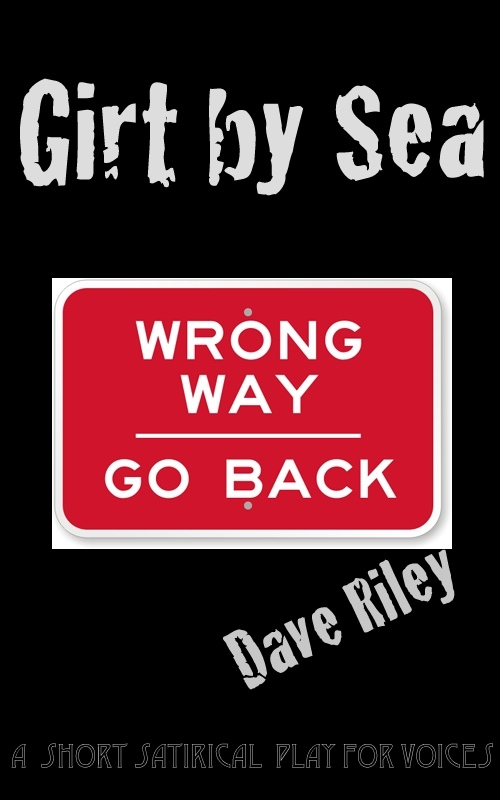
Girt by sea


Girt by Sea is an amalgam of several street theatre performances reworked as a play for voices (or for radio broadcast). There is nothing especially ambitious about the play as it merely tries to touch on a few notions about the mandatory detention of refugees and package them in a short, sharp piece that quickly gets down to satirical business.


(One day I'll lay this down as audio...)
________________________
CHARACTERS
COOEE!
AUSSIE OI!
INTERCOM (Some amplification and voice distortion required as through a loud hailer.)
_________________


FX SOUND OF VOICES DEVELOPED FROM A BABEL MIX OF MIDDLE EASTERN AND ASIAN LANGUAGES.

AS VOICES EBB THEY BLEND WITH THE SOUND OF WAVES LAPPING ON A BEACH.

ROUGH DRUM ROLL FOLLOWED BY A SINGLE DISCORDANT NOTE FROM A PARTY WHISTLE OR KAZOO. FOLLOWED BY COUGHING AND MURMUING AS IN A HALL OF PEOPLE.


COOEE! AUSSIE OI! (TOGETHER. SINGING UNACCOMPANIED.)
Australians let us all rejoice
AUSSIE OI! For we are young and free
With ……..and
Our home is girt by sea….

COOEE! (IN TUNE - HUM/UM)
La da de da de da da da

AUSSIE OI! A beauty rich and rare

COOEE! (IN TUNE - HUM/UM)

Ummm Hmmmm Hmmm Hmmm Ummm Hm


COOEE!/AUSSIE OI : (TOGETHER)

AD vance Os tray lia fair….!


FX: DRUM ROLL. MUCH WHISTLE AND KAZOO BLOWING HAD BY ALL. SUDDEN SHARP BEAT. SILENCE


COOEE! Girted by sea.--

AUSSIE OI! Makes you think.

COOEE! To "girt".

AUSSIE OI! "Girtedness".

COOEE! Aussie! Aussie! Aussie!

AUSSIE OI! Oi! Oi! Oi!
(BOTH LAUGH.)

FX: BLOW AND HUMMING OF KAZOOS. DRUM BEAT. STOP).

COOEE! Girt--

AUSSIE OI! Sea.

FX: BABBLE OF ASIAN AND MIDDLE EASTERN LANGUAGES.

COOEE! Land.

AUSSIE OI! Girt-

COOEE! Sea.

FX: BABBLE OF ASIAN AND MIDDLE EASTERN LANGUAGES.

AUSSIE OI! Land.

COOEE! Girt-

AUSSIE OI! Sea.

FX: BRIEF BABBLE OF ASIAN AND MIDDLE EASTERN LANGUAGES.

(AUSSIE OI & COOEE! THEN DO THIS CIRCUIT OVER AND OVER FASTER AND FASTER RAISING THEIR VOICES UNTIL…)

AUSSIE OI!: Land.

COOEE! Girt-

AUSSIE OI! Sea.

FX: BABBLE STOPS

(PAUSE.)

COOEE!/AUSSIE OI!
Refugees!

FX: DOUBLE DRUM BEAT.

COOEE! Over there,…
AUSSIE OI! Beyond the girt
COOEE! Beyond the girt… people live in garbage tips.
AUSSIE OI! Over there, they work for next to nothing.
COOEE! Over there, life is cheap.
AUSSIE OI! The root problem over there… is…
COOEE! --there's too many of them
AUSSIE OI! Over there.
COOEE! Or they're not over here.
AUSSIE OI! Over here, you can live the life of Riley if you work hard.
COOEE! But we don't want them from over there working hard over here.
AUSSIE OI! If they were over here who'd be working over there making all the stuff we buy over there?
COOEE! So all those over there need to stay over there so over here can stay the same. If they weren't over there we couldn't enjoy over here as much as we do. So we need them over there.
AUSSIE OI! And they need us over here. That's the rule, the status quo…that's geography in the market place.
COOEE! Thus the girt!
AUSSIE OI! (AGREEING)
Thus the girt!
COOEE! Without us over here, who'd buy what they've got to sell? It's a well known fact that over there you can live much cheaper than over here.
AUSSIE OI! Over here we don't live on garbage tips. Over here we've got a mortgage, a car to run and reticulated sewerage….Over there you can get by without those things.
COOEE! (ASIDE) So why don't they!
AUSSIE OI! Over here we've got problems. Over there they have them too. But the problems over there are just so BIG.
FX: DRUMBEAT.ROLL. CYMBAL.
COOEE! Over here we have a big enough task making ends meet. Over there it is probably the same…but hey! we're not over there, we're over here. And since we are over here, over there is a world away.
COOEE! Thus the girt!
AUSSIE OI! Thus the girt! So who gives a stuff, if over there gets it tougher than we get it over here.
COOEE! It's all relative. That's life.
COOEE! AUSSIE OI! (TOGETHER)
Fortunately it 's not ours.
FX: DRUMBEAT - CALL TO QUARTERS.
INTERCOM I wouldn't "jump the queue" if I was you
"Cause we got ways and means.
Of making sure we lock the door
To protect our coastal seams.

Wether you swim or drown
It's all the same
'Cause we don't give a stuff
Blather and cry, winge and complain
It's useless --- we play tough.

Girt by sea we can live with
Refugees we can't.
We secure our borders
By giving orders --
One rule for all when you approach our door
It's simple, just …piss off!
COOEE! Globalise existence if you will. We're ready here downunder.
AUSSIE OI! Restructured--
COOEE! Best practiced--
AUSSIE OI! Marketed--
COOEE! Fiscally reformed--
AUSSIE OI! Downsized--
COOEE! Privatised--
AUSSIE OI! Corporatised.
COOEE! Christ! We got a GST!
AUSSIE OI! So come on world
COOEE! Oi! Oi! Oi!
AUSSIE OI! And do you stuff:
COOEE! Send us your huddled downturns, your in-balanced sheets and your homeless capital yearning to be free!
AUSSIE OI! Oi! Oi! Oi!
COOEE! This is Australia calling.
AUSSIE OI! (SHOUTING)
Coooooooo_____ee!
FX "COOEEE" ECHOES…ENDS. THEN:
ANNOUNCER'S VOICE (FAR OFF. IN CLIPPED ENGLISH ACCENT OTHER THAN AUSTRALIAN)
Stay where you are Australia - I'm coming over!
FX: FIRST THREE BARS PLAYED BY A BRASS BAND OF ADVANCE AUSTRALIA FAIR. THIS ENDS ABRUPTLY.
CARCOPHANY OF ASIAN URBAN SOUNDS MESHES WITH ANTHEN FROM WHICH EMERGE…CHORUS: AUSSIE OI'S AND COOEE'S VOICES EITHER PRE-RECORDED AND PLAYED IN FAST MODE OR THE SAME ACTORS EMPLOYING DIFFERENT OR DISTORTED VOICES .


1ST VOICE I don't know who they think they are fooling --
2ND VOICE We suffer and starve and go without schooling.
1ST VOICE: To make ends meet we gotta come cheap --
2ND VOICE Selling our labour till the end of the week.
1ST VOICE They told us the old days were over and gone -
2ND VOICE But everyone knows the same days live on.
IST VOICE Labour and capital, rich and poor --
2ND VOICE We don't want to live like this anymore.
IST VOICE We need some respite
2ND VOICE But what do we get?
1ST VOICE The same old "solution" -
BOTH Debt! Debt! Debt! …
FX: THIS EXTENDS INTO A BALINESE STYLE MONKEY CHANT WHICH DRIFTS INTO THE BACKGROUND WHILE AUSSIE OI! SPEAKS.
AUSSIE OI! What are we going to do? Offshore -- everywhere -- there's all these people dead set keen on coming here or any location offering a shot at three meals a day and an indoor toilet. Not that that's guaranteed, but that's the promise in the promised lands. And whether you recognise it or not what we've got here in the way of material pleasures is as good as it gets. Yesiree, it won't get any better than this. You may have misgivings. You may be one of those who harps on and on about how hard done by you are. Get a life! Instead of being born into a triple-fronted brick veneer low set and a regular breakfast of Weetbix plus choice of beverage, you could have been stuck in the household of a landless peasant from Upper Volta with early tuberculosis and a nasty case of intestinal worms. Get real, matey! You've got it good.
FX: "DEBT" MONKEY CHANT STOPS'
INTERCOM Stay away.
FX: WAVES ON BEACH
INTERCOM Stay away. Stay away.
FX: WAVES ON BEACH. STOP.
COOEE! Sheep shit in the South Pacific. With your baa lambs and your empty sky, you big fella stretched out sun baking.. Sunburnt. Sleepy. Empty. You lucky bastard of a country. You your own boss cockie. Sheep shit and blowies. My country. "Core of my heart."… My suburban quarter acre block with 3 b/rms, VJ interior, carpeted floors, refurb kitchen and all cons. You it. You girt by sea. You gloating in your wee little Aussie battlers this small. Youse the underdog. Youse all mates. Too bloody right you are… So with a sprig of wattle in our hand we celebrate from whence we came. Australians! You true blue sons and daughters of Oz! I ask you to charge your glasses and raise your voices. And let's hear it for all the dinky-dyes out there:
(ATTEMPT AT SINGING)
Australians let us all rejoice, for we are young and free ... etcetera, et…cet…tera…rah…rah…rah…rah!.
FX: MERGES INTO BACKGROUND OF DRUNKEN PARTY EXCHANGE WITH CLINKING OF GLASSWARE. TAPERS OFF.
INTERCOM Stay away!
FX: WAVES ON BEACH
INTERCOM Go back where you came from!
FX: WAVES ON BEACH
INTERCOM You're not wanted here!
FX: WAVES ON BEACH STOP.
(PAUSE)
COOEE! If we offend it is with our good will.
AUSSIE OI! We want the best
COOEE! The very best
AUSSIE OI! For all and sundry.
COOEE! For you--
AUSSIE OI! And you--
COOEE! And you--
AUSSIE OI! For all of us.
COOEE! In this dry brown land do dwell.
(PAUSE)
AUSSIE OI! But the job market is so very, very tight.
COOEE! Let us make this quite clear: Very tight.
AUSSIE OI! We're not to blame.
COOEE! Free enterprise being what it is.
AUSSIE OI! Has its ups.
COOEE! And downs.
AUSSIE OI! Here --
COOEE! As well as over there --
AUSSIE OI! Here .. there… is-simply-not-enough-to-go-around.
COOEE! Not enough land.
AUSSIE OI! Think of our carrying capacity.
COOEE! Hospital beds.
AUSSIE OI! Think of our carrying capacity.
COOEE! Pensions.
AUSSIE OI! Think of our carrying capacity.
COOEE! Money.
AUSSIE OI! No where near enough of that.
COOEE! Jobs.
(PAUSE)
AUSSIE OI! So if you are down and out ...
COOEE! We don't want to have to be lifting up our heads and shouting:
AUSSIE OI! Some wog's got my job!
COOEE! Do we?
AUSSIE OI! (ASIDE) Many lands.
COOEE! (ASIDE) One voice.
AUSSIE OI! But them --
COOEE! Them. Them's a different matter.
AUSSIE OI! Sneaking into our country!
COOEE! (ASIDE) And there's no way of telling them from the locals.
AUSSIE OI! No way.
COOEE! No bloody way!
AUSSIE OI! If they were to-
COOEE! Play by the rules
AUSSIE OI! Follow procedures.
COOEE! Join the queue.
AUSSIE OI! They'd be most welcome here.
COOEE! Most welcome.
(PAUSE)
AUSSIE OI! (AGGRESSIVELY) Don't come in the first place.
COOEE! We're not a soft touch.
AUSSIE OI! (ASIDE) Many lands.
COOEE! (ASIDE) One voice.
AUSSIE OI! But to sneak in!
COOEE! Sneak!
AUSSIE OI! Without an invite.
COOEE! We don't want people like that here…
AUSSIE OI! You never know what to expect…
COOEE! (ASIDE) It's embarrassing…smudging our picture postcard like that.
AUSSIE OI! We like to pick our own.
COOEE! It takes real effort to become a bona fide Australian.
AUSSIE OI! You don't become one by sneaking into the country, for instance.
COOEE! That's un-Australian.
AUSSIE OI! No. To become one you gotta play by the rules.
COOEE! Our rules.
COOEE!/AUSSIE OI! (TOGETHER.)
--We're searching for identity.
FX FIRST TWO BARS OF WALZING MATILDA. ABRUPTLY STOPS
AUSSIE OI! (ASIDE) Many lands.
COOEE! (ASIDE) One voice.
AUSSIE OI! COOEE! (TOGETHER. CURSORY ATTEMPT AT SINGING )
We are Aus-tray-lee-yarn.
COOEE! And just because you're here it doesn't mean you can stay.
AUSSIE OI! That's taking advantage.
COOEE! Stay away
AUSSIE OI! Stay at home.
COOEE! Go someplace else.
AUSSIE OI! Not here. Out there.
COOEE! Somewhere.
AUSSIE OI! Beyond the girt.
FX: WAVES ON BEACH QUICKLY BUILDING IN VOLUME AND POWER WITH A RISING WIND.CRY OF SEAGULLS. MUSIC RISING ABRUPTLY: 'ONEDIN LINE THEME' (THE BALLET MUSIC FROM SPARTACUS BY KHACHATURIAN.)
COOEE! (SHOUTING) Not here. Out there. Beyond the bloody girt.
FX: SEA, MUSIC AND WIND SOUNDS TAPER OFF QUICKLY TO SILENCE.
COOEE! Girt--

AUSSIE OI! Sea.

FX: BABBLE OF ASIAN AND MIDDLE EASTERN LANGUAGES.

COOEE! Land.

AUSSIE OI! Girt-

COOEE! Sea.

FX: BABBLE OF ASIAN AND MIDDLE EASTERN LANGUAGES.

AUSSIE OI! Land.

COOEE! Girt-

AUSSIE OI! Sea.

FX: BABBLE OF ASIAN AND MIDDLE EASTERN LANGUAGES.

AUSSIE OI! Land.

COOEE! Girt-

AUSSIE OI! Sea.

FX: NO BABBLE
(PAUSE)
COOEE!/AUSSIE OI! Refugees!
FX: CICADAS, BLOW FLIES,ETC ON A HOT SUMMER DAY.
RISING FROM BACKGROUND -- FAR OFF TO OFF --IS SOUND OF ETHNIC RADIO EG: ARABIC THEN INDONESIAN POP MUSIC -- AS STATIONS ARE CHANGED. THIS IS SUDDENLY SWITCHED OFF AND REPLACED BY STERILE MUSACK. SOUND OF A MICROPHONE BEING HANDLED AND STATIC.
INTERCOM Unlawful non citizens…Unlawful non citizens….This is not a borderless society. You are not wanted here….You are unauthorized arrivals...You are unauthorized arrivals…You have chosen not to apply for a visa. You refused to line up. You should have staid at home. You have shown no respect for the rule of law in this country...You have shown no respect.
FX: BLOW FLIES BUZZING
INTERCOM (PAUSE)
You are detained as a result of your unauthorised entry, not for asylum seeking …not for seeking asylum. You should have done that before you left to come here. That was your mistake. That was your mistake...You will be removed from here. You will be taken to the place from whence you came…You cannot stay in this country. You are going to be sent home...or somewhere else. You are non citizens who have broken our laws.
FX: BLOW FLIES BUZZING
AUSSIE OI! Naughty, naughty, naughty…
COOEE! We don't like that.
AUSSIE OI! Not at all.
COOEE! Any offshore resource is similarly girt by law.
AUSSIE OI! Girt by law.
COOEE! So if any unlawful non citizen were to beach themselves on Christmas Island.
AUSSIE OI! That's girt by law.
COOEE! Ashmore reef.
AUSSIE OI! Girt by law.
COOEE! Cocos Island.
AUSSIE OI! Girt by law.
COOEE! Oil rigs at sea.
AUSSIE OI! Girt by law.
INTERCOM (BARKED AS ON PARADE GROUND)
Excised offshore places strengthening our territorial integrity.

FX THREE BARS, ADVANCE AUSTRALIA FAIR.

AUSSIE OI!/COOEE! (TOGETHER PSEUDO SINGING IN 4/4 TIME AS SOON AS MUSIC STOPS)
Girt by law
Girt by law.
FX: BLOW FLIES BUZZING
INTERCOM (BARKED AS ON PARADE GROUND)
As your official detention service provider we have been contracted to run this immigration detention facility.
AUSSIE OI!/COOEE! (TOGETHER PSEUDO SINGING)
Girt by law
Girt by law.
INTERCOM (PROMOTIONAL)
For around $120 per person per day twin share we offer a great deal. Three meals a day. Culturally appropriate menus. A bed for all. Laundry facilities. Games room. Shower block. Unlimited chilled water, tea, coffee, milk and sugar. 24 hour medical centre. All mod cons. So if you are depressed, severely depressed or slip into psychosis on occasion during your extended stay with us…We're prepared.
FX: BLOW FLIES BUZZING. STERILE MUSACK* BEGINS. THEN STOPS
INTERCOM (VOICE MOVE FROM 'OFF' TO 'ON' AS IN PASSING BY]
No escaping… No self mutilation… No starving to death…No sitting on roofs.... No stitching of lips together…No torching facilities…No rioting … No litigation…No attention seeking…No embarrassing behaviours of any kind … None of that…You can't complain. Not allowed…That's un-Australian.
[VOICE MOVE FROM 'ON' TO 'OFF', THEN 'FAR OFF' & PART REPEAT THROUGH A FADE.]
FX: BLOW FLIES BUZZING . SILENCE. STERILE MUSACK BEGINS. THEN STOPS
INTERCOM Thankyou for waiting. Your application as an unlawful non-citizen is being processed.
FX: STERILE MUSACK BEGINS. THEN STOPS
INTERCOM Thankyou for waiting. Your application as an unlawful non-citizen is being processed.
FX: STERILE MUSACK BEGINS. THEN STOPS
INTERCOM Thankyou for waiting. Your application as an unlawful non-citizen is being processed.
FX: STERILE MUSACK BEGINS. THEN STOPS.
INTERCOM Thankyou for waiting. Your application as an unlawful non-citizen is being processed.
FX: STERILE MUSACK BEGINS. FADES. SOUND OF A DISCONNECTED PHONE LINE. TAPERS OFF. DRUM ROLL. FOLLOWED BY SINGLE LONG BLOW ON SPORTS WHISTLE
INTERCOM All men on stage!
FX: RUNNING ON WOODEN FLOOR.
INTERCOM Everybody down on one knee! Now bend down low and look battle-worn. A bit more tension there. A touch more gloom on your faces. That's it.
You there, you'll play the role of Dole Bludger. Now dance over to the others with an expression of furtive glee.
FX: SINGLE PERSON DANCING ON WOODEN FLOOR.
INTERCOM Furtive glee, I said, furtive glee! Ah, that's better.
All available female personnel. Line up!
FX: RUNNING ON WOODEN FLOOR.
INTERCOM You -- yes you! -- you're Miss Homelife. Sorry, Mrs Homelife. You seem demure enough for the role. And you're Miss Equality, because it's all the same to me whoever plays the part. And you're Miss Australia, so look stalwart and generous. Stalwart and generous, I said!
Get ready now. Let's go.
All you men there, break from your imaginary toil and rise upward toward an imaginary sun. Mrs Homelife, Miss Equality and Miss Australia, minister to them. Minister! Put some love in it! They're your little darlings, for crissake!
Men, pretend "you have nothing" and imagine "you can make it". Climb over each other, symbolising the effects of a free market economy. Excellent! Now build a pyramid with your competing bodies.
FX: STRAINED SCRAMBLE OF BODIES. SOME FALLING.
INTERCOM How about a little teamwork there! That's better. Dole Bludger, lay down flat so you can break their fall.
You on top, take an imaginary flag in your hand and wave it to the tempo of a free country, conveying the joy of being a victorious Aussie battler. Great.
All ladies stand up. Come on up you get. Hang imaginary garlands around the necks of everyone -- for trying. That's to symbolise the blooming of happiness that only comes with effort.
Wonderful! That's it. That's it! Let in the sheep. Bring up the kookaburra chorus.
FX BACKGROUND: SHEEP. KOOKABURRA CALL.
INTERCOM Add the didgeridoo.
FX BACKGROUND: DIDGERIDOO LEAD IN. ADVANCE AUSTRALIA FAIR SLOWLY RISING

INTERCOM Now, unfold the flag. Slouch hats on. Wave the sprigs of wattle. I said, wave them -- hold them aloft and give them a bloody good shake. That's better. Now all you ethnics in the front row, face the front and smile. Good. Excellent. Send in the wombat and the kangaroo. And you, indigenous Australian blackfella-type person in a loin cloth, show us your teeth. Now we're cooking. Are we happy or what? I can't hear it? Are we happy? You bet we are.
(PAUSE)
No wonder they all want to come here.
FX ADVANCE AUSTRALIA FAIR RISES QUICKLY IN VOLUME AND OCHESTRATION. THEN FADES. WAVES ON BEACH. BLOW FLIES BUZZING.

FINIS


*STERILE MUSACK: [Suggestion] The same few bars--repeated each time-from the instrumental version of The Girl from Ipanema (Antonio Carlos Jobim)

VIDEO:Australia Day: sheep shit in the South Pacific


Australia Day

Sheep shit in the South Pacific. With your baa lambs and your empty sky, you big fella stretched out in sun drying. Sunburnt. Sleepy. Empty. You lucky bastard of a country. You your own planet, your own boss cockie -- claiming all the sheep shit and blowies. My country, my land, my suburban quarter acre block with 3 b/rms, VJ interior, carpeted floors, refurb kitchen and all cons. You it. You girthed by sea. You John Howard. You Kevin rudd. You gloating in your wee little aussie battlers this small. You the underdog. You all mates. You hate boongs, poofs, sheilas ... but love a shag, a beer and a day at the footy. You say: Up there Cazaly! and watch the replay on the box. God! You love this country! (But never say so 'til you're pissed.) You love the RSL (same thing). You can play the pokies, have a beer and feel real proud to be an aussie. Too right! Waltzing Matilda you come a waltzing with me. Green and gold to win. You say: don't put that in your mouth, some Chinaman could have been wiping his bum with it! You say: wog. You say: we're not racist. You say: please explain. You say what they want you to say. You say: let's go for a swim. So you stretch out on the border of sand with the 15+ and the kids, and work on your melanoma. You sleep in this land of the real long smoko; work, breed, and then you die. But first we celebrate this day of all days -- Australia day. Day 1. And with chicken pox and poison baits and murder and rape we peopled the empty place downunder with those who could speak as we do and know an abo when we see one. The day we began, way back when one flag could claim it all.

So with a sprig of wattle in our hand we celebrate from whence we came. Australians! You true blue sons and daughters of Oz! I ask you to charge your glasses and raise your voices. And let's hear it for all the dinky-dis out there: Australians let us rejoice, for we are young and free ... etcetera.
--Dave Riley


Happy Invasion Day 2010 from Fear of a Brown Planet on Vimeo.

Blogging is a serious business in the Socialist Alliance

...says he, hopefully.


I've been working on a renovation for the Socialist Alliance's Tasmanian blog

In the SA most branches only discover their web presence when an election is pending and one is indeed on the horizon in Tassie in March.Thus the refit.

So designing a setup that suits electioneering (while also fostering a greater confidence in blogging outside the polling times) is all part of the service.

Everyone to be on the same page.

While comrades are still stuck in the attitude that an online presence is only about showcasing your wares, my hope is that the SA can move collectively towards an online engagement which uses the web as a major in-house organising tool. This level of Web 2.0 utlisation hasn't quite registered...but give it time.My main argument is simply this: on the web you can get everyone to be on the same page (even if that page is more than one web page)
Perhaps because of my own illness,I respect the online digital universe as a very powerful organising medium. I have learnt to depend on its form to regulate what I do as it helps me think and plan.When you  compose content and format your material for the web, you are encouraged to be coherent as it's like note keeping and running your own to-do list collectively. It fosters planning ans d a certain by the-seat-of -your -pants logic It generates its own discipline which forces you to seriously address how you communicate. You are also given the power to access your archived stuff even more easily than you could on your own computer's desktop. Such 'cloud computing' nonetheless has a very shallow learning curve as in effect, if you can compose an email message you can use any online editing window or tool which uses the exact same interface. Dependency on paper handouts forgets that hard copy can be lost or read only once before being junked.Similarly, online information is not limited by space considerations and with the ease of graphic or image addition, can be more visually informational than most printed means that has to be carefully laid out and printed and distributed usually by hand.


I mean among that 'everyone'...
  • those who are non members and are interested in the SA and surf on over to investigate;
  • journoes and the like from the mass media outlets who background the party (this is why you need to make press releases easily accessible online as well as an image gallery);
  • SA members of branches in the locality  as well as at large members, 
  • SA members from around the country who want to check out what you are up to locally and learn from your campaign  experiences;
  • editors of SA's national journals seeking images, text, and reports for broader distribution and sharing--such as part of national newsletters or reports;
  • members of the various local SA campaigns who look to the blog for up to date information about gatherings, and resources they can download and use. Such a key element is an easily accessible events listing -- and preferably a calendar -- and an attached wiki (and all local blogs are paired with a wiki) which enables the branch to share files by sharing links to uploaded files on their blog. 
  • any and every one. This is especially true if you seek to share some multimedia. Why send people to YouTube or Picasa or Flickr  or  your own personal diary existence  on Facebook -- when you can share a link to your own party specific web presence with all the bits and pieces of your political existence attached. So embedding and sharing really comes into its own when you blog it.(On the Tassie blog you'll see slideshows, videos, Powerpoints,radio interviews and advertisements,  a map to the local Activist Centre..etc. all embedded and shared).
In that sense these web outposts are clearing houses that tick a lot of boxes and unlike other left parties, the SA can use such a tool to ensure its operations are open to scrutiny -- in a sense of what you see is what you get.

That's why what is posted to the SA national web site  has been a standard agenda item for our national convenors to discuss. The same attention needs to be drawn to the local web presences and be a concern of local bodies..

The SA needs to get away from single issue email postings which may verge on spamming and  generate regular local newsletters. It also needs to write , even the smallest of, reports on its local activities -- whether they are a  political or a social event, and post them webside as they are all part of the experience of membership.

Single posts with an event or report focus can easily serve as links in an emailed newsletter so that your newsletter can be an aggregated by simply posting to the blog and then later sharing links to its content. This is in fact how we do Alliance Voices.

And since everyone today owns a digital camera or a mobile phone that also  may shoot photographs -- your regular SA member should take photographs at events and share them on the local blog at least. I mean, why take photographs and not share them?

(Why not take photographs...?)

Considering the Tassie blog as a sample, the elements in situ are:
 In the works is a branch form which visitors can fill in and flag their interests and what they'd like to volunteer for but I'm hoping to make that generic and not Tassie specific,


Jan 23, 2010

Socialist Alliance: Public Transport campaigner to run in Kosky’s old seat - calls for free trains


Socialist Alliance candidate for Altona district Margarita Windisch has welcomed Transport Minister Kosky’s resignation as overdue but says Kosky was just a symptom of a larger problem for Victorians - the negligent ALP government. 
“Our state government has constantly failed people and the utterly shambolic public transport system is just one example”, says Windisch, adding that the ALP is nothing more than a political machine that puts profits before people and the environment.
While Brumby wines and dines those with enough money to buy his ear, struggling public services, soaring utility costs and opinion polls are ignored. James Packer gets extra pokie machines for his Casino, but bushfire victims are fobbed off and hospital queues increase.
Even though Victoria’s social services are in crisis, Brumby has prioritised spending over $300 million on refurbishing the Melbourne Park tennis centre! The ALP has also ignored the threat climate change poses to the community and refuses to take urgent action.
It’s time for a government that takes public opinion on climate change and public transport seriously.
Socialist Alliance believes that an expanded, well integrated, frequent and free public transport system is exactly what our environment needs, and is essential to provide the service Victorians deserve.
Working towards a zero emissions economy is critical, especially in the bay area where rising sea levels could threaten parts of our suburbs. That’s why Socialist Alliance advocates an urgent shift to 100% renewable energy to go hand in hand with a massive job creation program.
Margarita Windisch lives in the Western suburbs, is a former tram conductor and works   currently as a community welfare teacher. Windisch was part of the Dump Connex campaign in 2009 which involved campaigning on train platforms and carriages where hundreds of petitions were signed and over 100 000 pamphlets distributed to commuters. She is an active union member, has taken part in anti-war collectives and campaigns for civil liberties, women’s rights and public services.
If elected Margarita Windisch will prioritise:

  • An expanded, frequent and free public transport system that is run by the public
  • The creation of green jobs and working towards 100% renewable energy
  • Working towards sustainable water solutions
  • Investing tax payers funds into urgently needed social services and infrastructure
  • Bringing public utilities back into public ownership & community control
  • The phasing out of pokie machines
  • The abolition of all anti worker and anti union laws, including the Australian Building and Construction Commission, which unfairly targets building workers
Margarita is interested to know what issues concern you and will be holding a ‘Meet ‘n’ Greet’ at Logans Reserve (corner of Pier and Queen Street Altona) from noon on Sunday 31st  of January.  A relaxed BBQ - picnic including Eritrean food will be available.   
For more information on the campaign or on how to join and/or help out please by:
Authorized and printed by Sue Bolton, 5/407 Swanston Street, Melbourne 8005

Tim Gooden -- "where there is an injustice...have a go rather than just ignore it.”


Left to battle at Trades Hall

Andrew Mathieson


Colourful murals line a wall of Geelong’s Trades Hall car park.

Among the union slogans, one image features a worker draped in a Eureka flag T-shirt, arms raised in triumph.

The stocky figure’s head is shaven short and the moustache seems unmistakable.

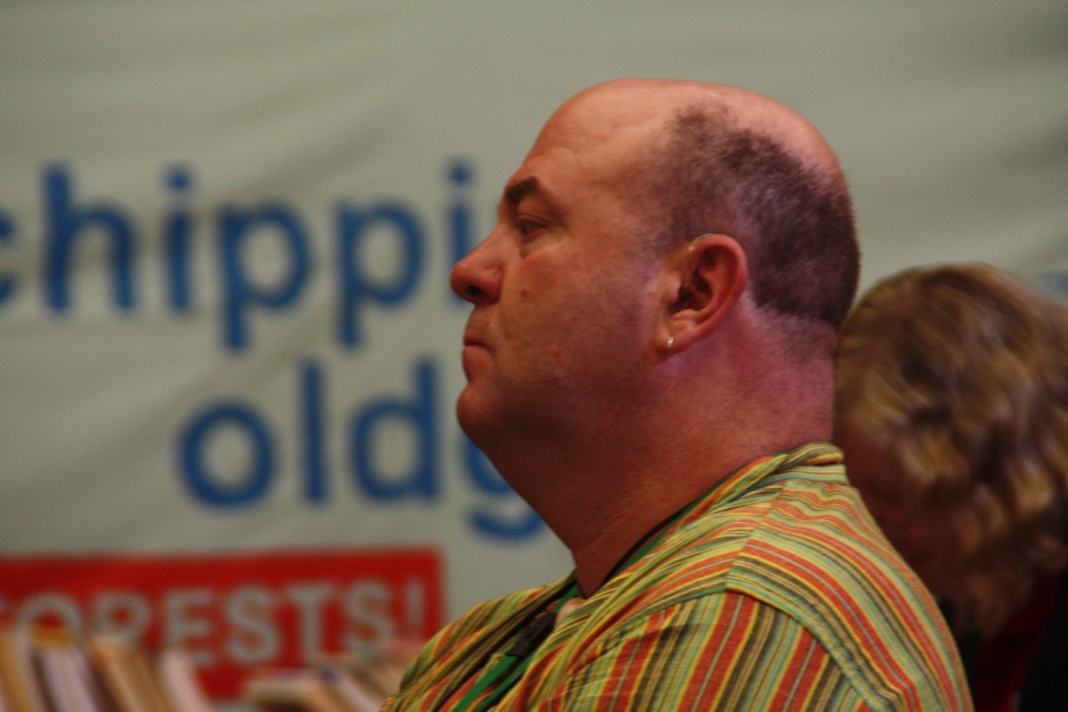
A grinning Tim Gooden (pictured) quickly points out: “That’s not me.”

The Geelong Trades and Labour Council secretary has heard the comparisons before.

“A lot of people say ‘That’s you’,” he adds.

“I say ‘I’m not that fat’.”

Sandra Krantz painted the rank-and-filed metal workers a couple of years before Tim arrived at Trades Hall. And he was a carpenter.

“Some union officials have called us (Geelong unionists of the era) all extras out of a Mad Max movie,” Tim laughs.

“Most of them were metal workers, some were carpenters, and they had motorbikes.”

The 46-year-old shaved off his trademark moustache on return from a recent visit to Venezuela in support of the country’s solidarity movement.

He started the trip with a handlebar moustache and a goatee out of concern that a clean-shaven look would play havoc with his passport photo.

“We were in the tropics there and it drove me up the wall the whole time,” he tells, shaking his head.

“When I got back I was getting hayfever and thought ‘That’s it’, so I shaved it.”

Ventures to far-fetched locations are not uncommon for Tim. But casual holidays aren’t.

Attending a Socialism 21 conference in Nepal, the Manifold Heights resident preferred to mix with socialists of different persuasions than a climb a mountain with a local Sherpa.

“If you have to put down a theology, I would have to be a Leninist,” he remarks.

Tim is a contradiction at first sight.

Sitting at Trades Hall in his stubbies and work boots, he rattles off about Marxist scientific analysis and the histories of capitalism, feudalism and collectivisation of labour.

“There are two papers I always read every day: Australian Financial Review and Green Left Weekly,” he then says.

Before leading rallies and protests through the streets of Geelong, Tim first pocketed dollars working on a dairy farm near Wollongong aged just 10 and later as a dairy hand at a Coles supermarket.

A shift to Canberra to help build the new Parliament House was just a precursor of things to come.

“I intended to stay for six months but ended up remaining there nearly 18 years,” Tim ponders.

Union leadership had never been on the agenda until he spent time on a road gang as a bridge carpenter. Painters and carpenters were told to operate machinery and take on each other’s jobs.

They had never heard of multi-skilling back then.

The now defunct Building Industrial Workers Union took up the fight but needed a delegate to voice its concerns.

“Everyone turned to me and said ‘Well, you do it’,” Tim remembers.

“I don’t know why that was but I wasn’t even the leading hand.”

Also a part-time New South Wales rural service firefighter and later a public servant, Tim climbed high up the union ladder.

When the ACT Government purged the Canberra public service, a law degree then beckoned at 35.

Life has taken other twists, like fighting bowel cancer during university exams and suffering ear damage.

Tim lost half his hearing in both ears during an explosion on fire brigade duties.

Despite being one of the last 23 picked to join the ACT fire brigade from about 5000 candidates, his industrial deafness counted against him.

“I fought that for a few years and I eventually got an apology and acceptance I could do that (work as a firefighter),” Tim muses.

“I have always had this sense that, where there is an injustice, you should sort of have a go rather than just ignore it.”

Image: Alex Bainbridge

Dave Holmes: Arguments for Socialism

I've intended to do a left blog roundup for sometime but blogging on the Australian far left is a cottage industry engaged in by very few. Why this should be the case isn't very clear -- but the fact is that blogging isn't a standard communication medium this far to the  left.

Nonetheless, one of the newest blogs on the block  is a project begun by Dave Holmes -- who was, until its very recent merger with the Socialist Alliance, a long time leader of the DSP.(Right, Dave in the early seventies).

However,  the new trend in my neck of the political woods is to use the blogging platform to archive talks and newspaper articles (more on this in a  later post)that are delivered at forums and conferences  or published in Green Left Weekly (especially in their unabridged form before the GLW editor started cutting.)

Fortunately, this is what Dave Holmes is now doing.

His blog, Arguments for Socialism, is a selection of such items going back 19 years, and  comprise a running commentary on many topics that Dave, with his usual skill, addresses from a considered Marxist POV.

Besides contributions to history and political strategy & theory, the archive includes the introductory Arguments for Socialism series which has been published in Green Left Weekly.

This stuff is all great value so bookmarking the site is sure to enhance  your   reference resources on a range of key topics. Since Dave is always a very accessible writer and speaker, surfing his clearly presented archive and reading any items that take your fancy  is sure to be  time well spent

A sample listing from
Arguments for Socialism